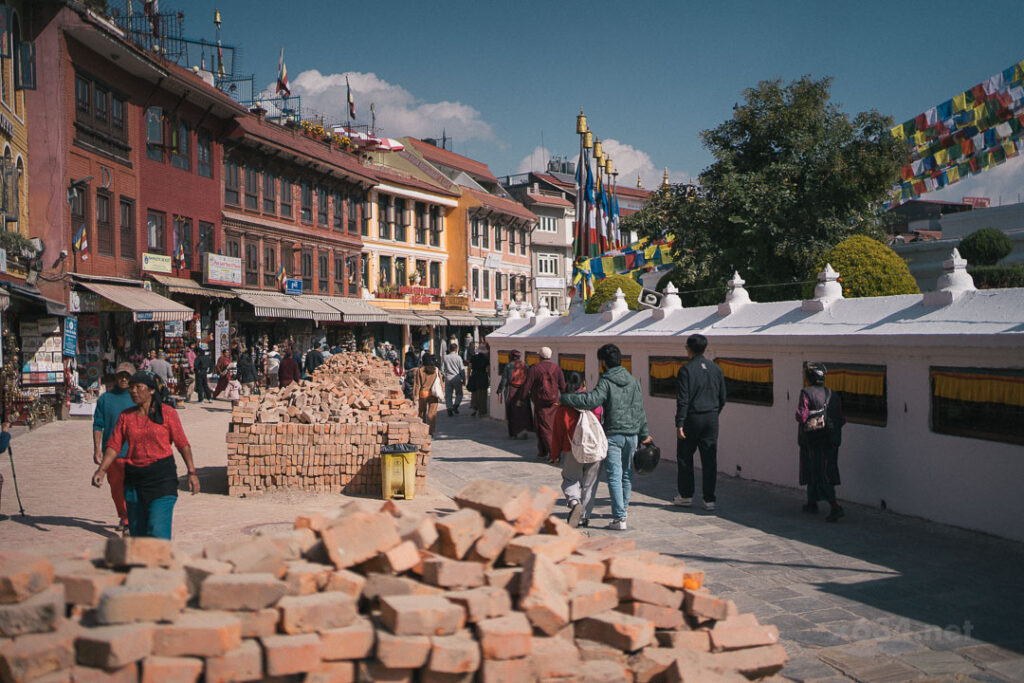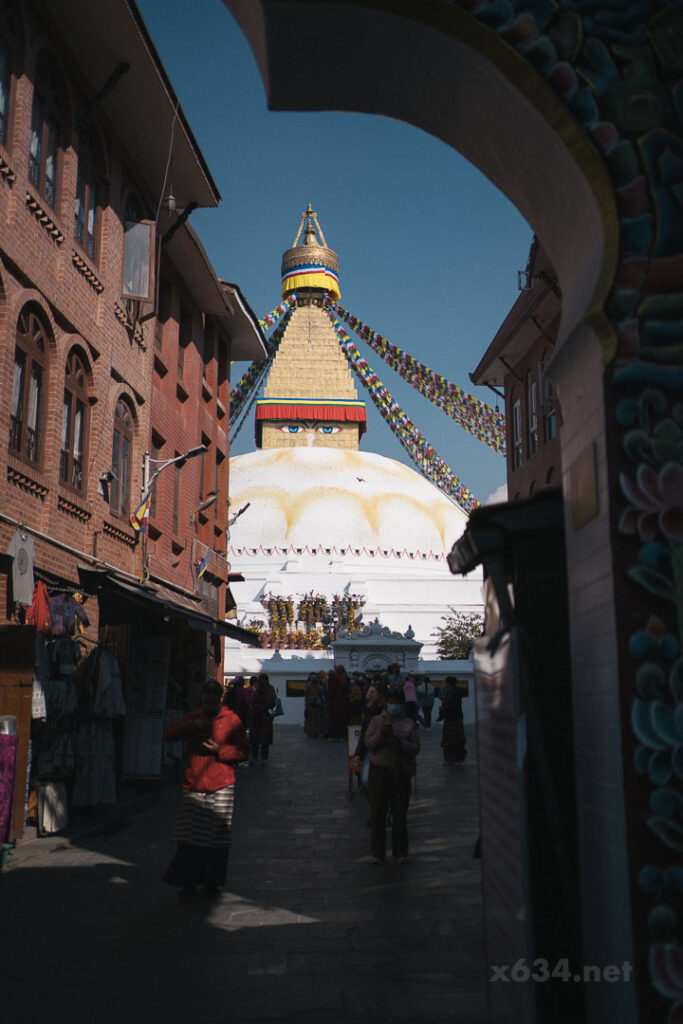
Dust and the noise of car horns. Passing through the dry streets of Kathmandu, a massive white stupa appears. The smell of incense fills the air, and the rhythmic jingling of bells can be heard.
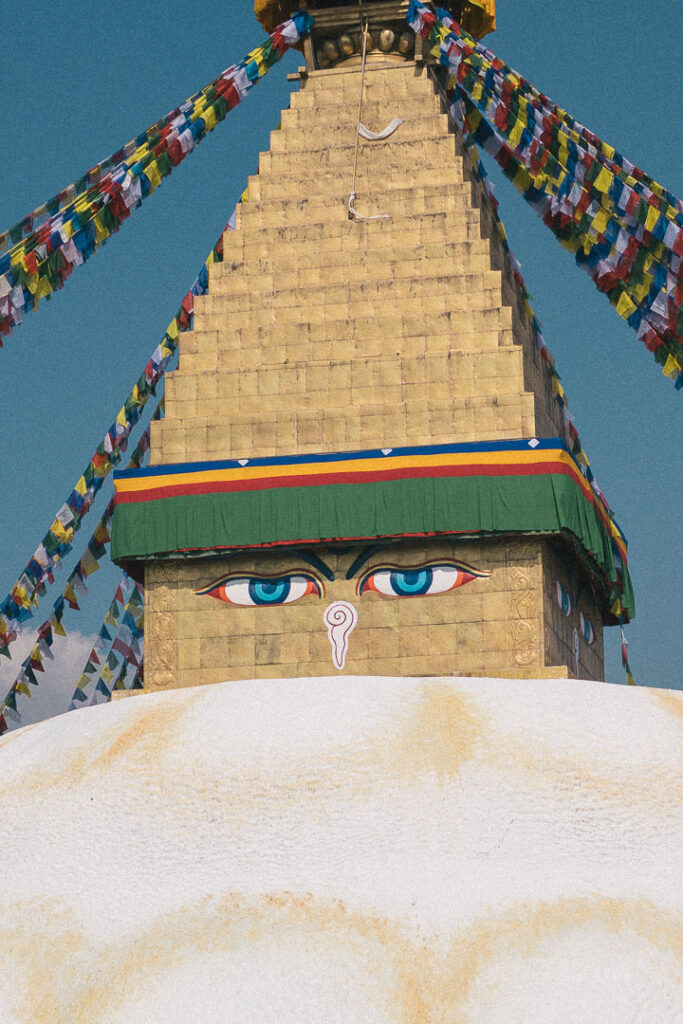
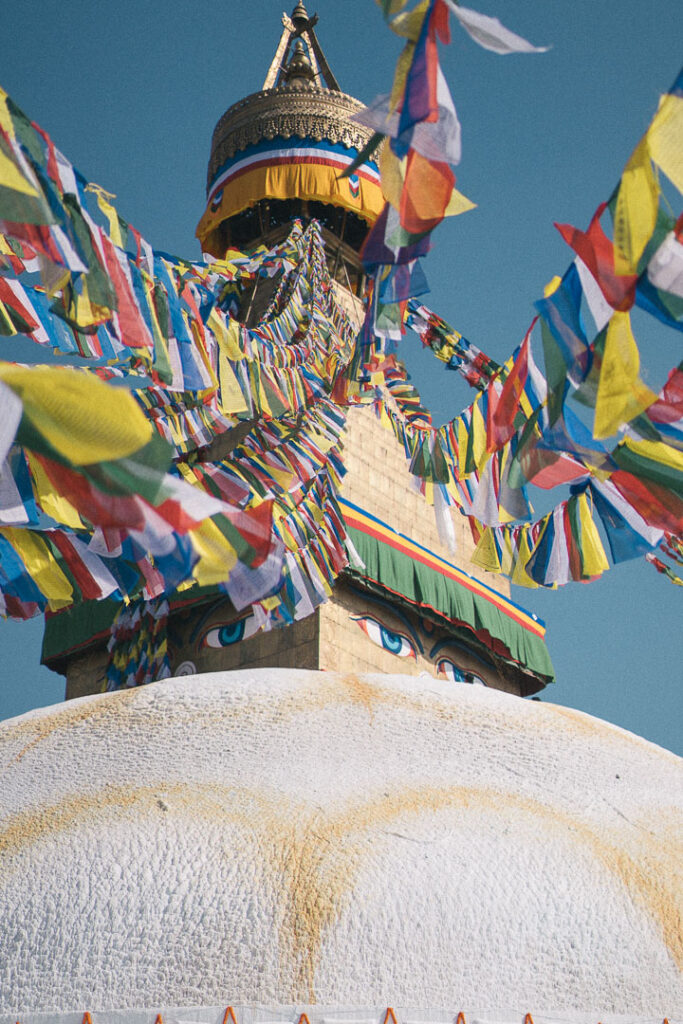
About 36 meters high. On its upper section, large eyes—eerie yet not unpleasant—are painted, watching over people through colorful flags. These eyes are called the “Eyes of Wisdom.” They don’t depict Buddha’s eyes but rather function as a symbol representing “seeing through everything.”
Looking closely, there’s also a spiral mark between the eyebrows. Sometimes referred to as the third eye, it represents insight that sees beyond what is merely visible.
Also, what looks like a nose—a “?” shape—is actually the numeral “1” used in Nepal, representing unity and harmony, symbolizing that truth is always singular. It’s not an illustration of a face, but a visual expression of Buddhist philosophy.
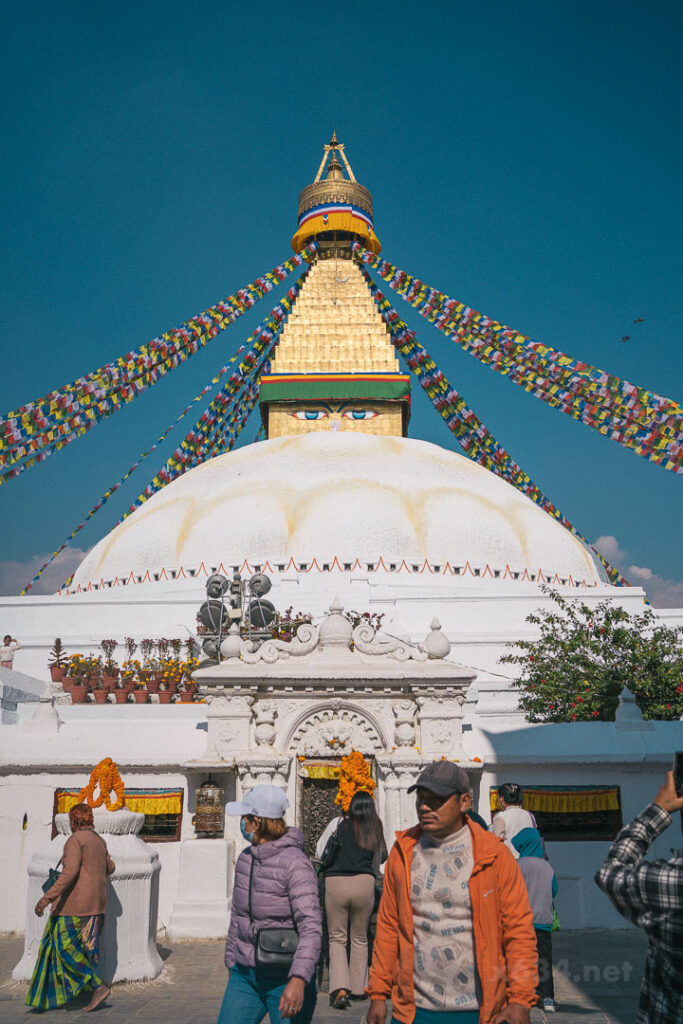
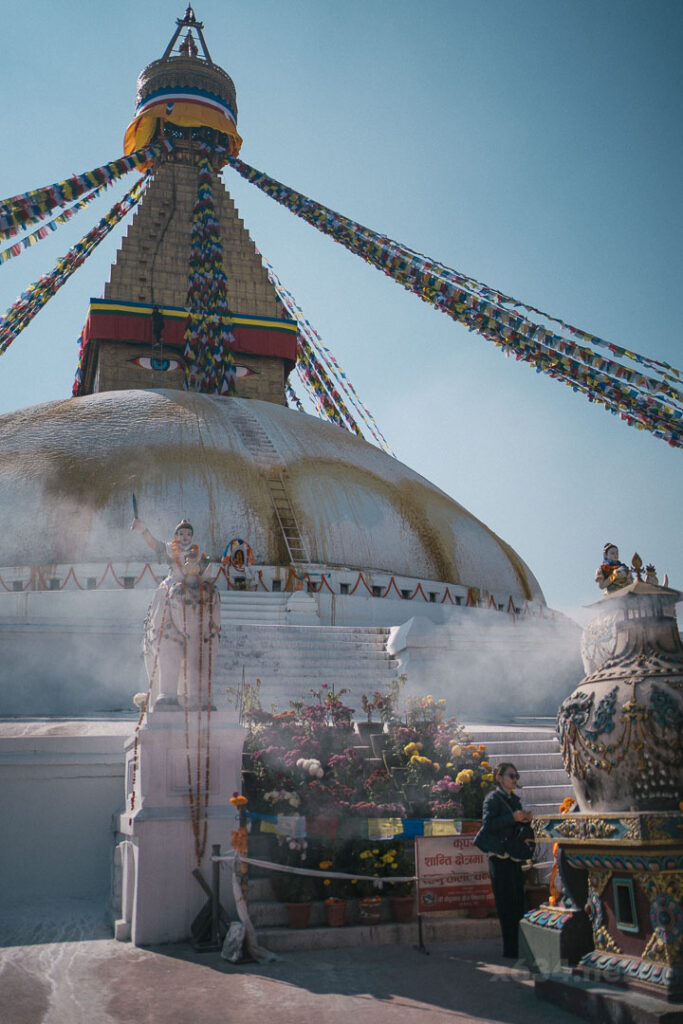
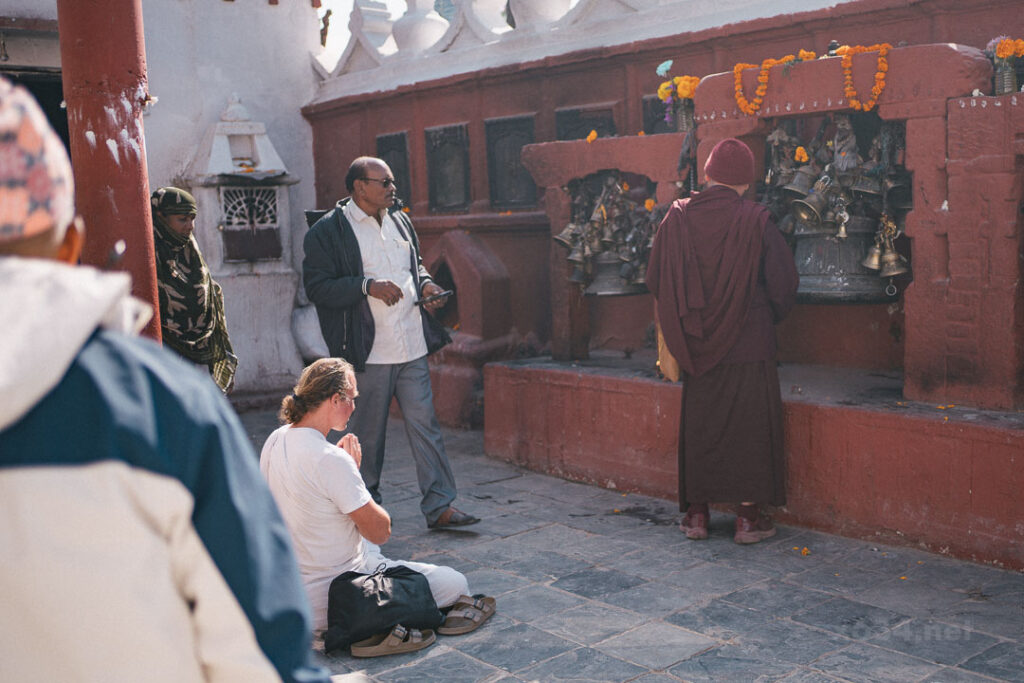
Nepal’s faith is a complex mixture of Hinduism and Buddhism, influenced by neighboring India, with extremely blurred boundaries between the two. However, the Boudhanath area was once the gateway of the trade route connecting Tibet and Nepal, so Hindu influence is minimal here. The atmosphere of Tibetan Buddhism remains strong, making it a pilgrimage center.
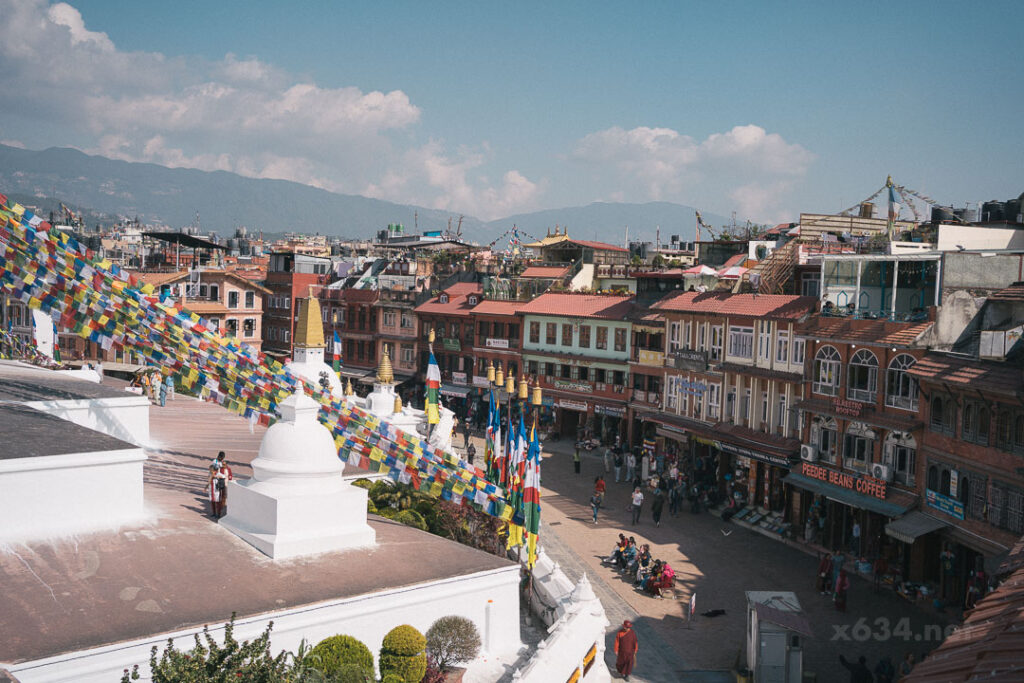
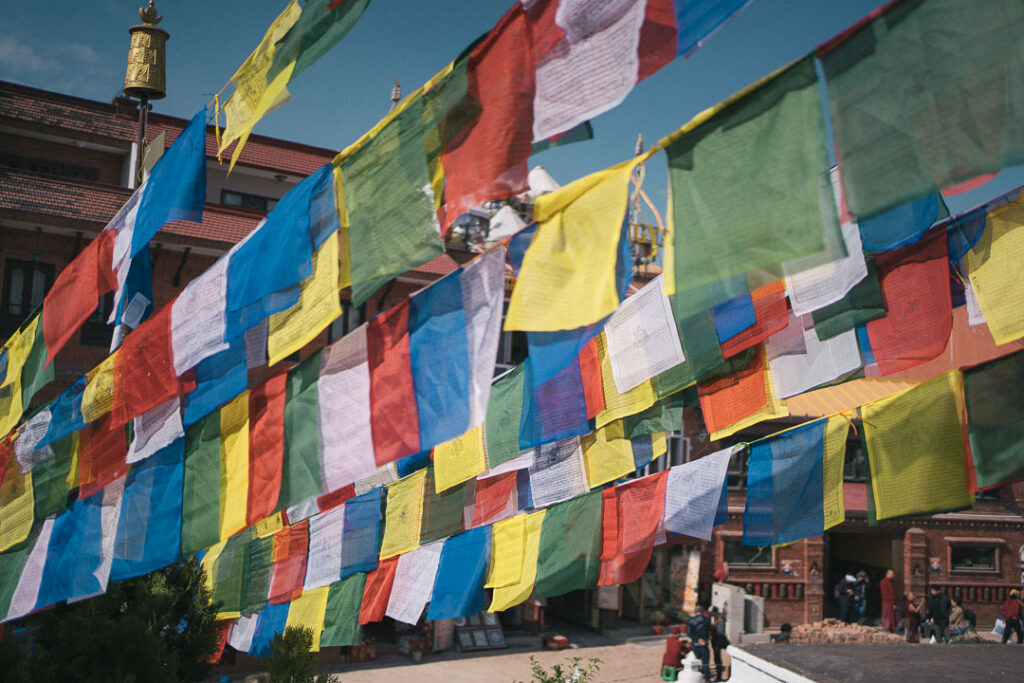
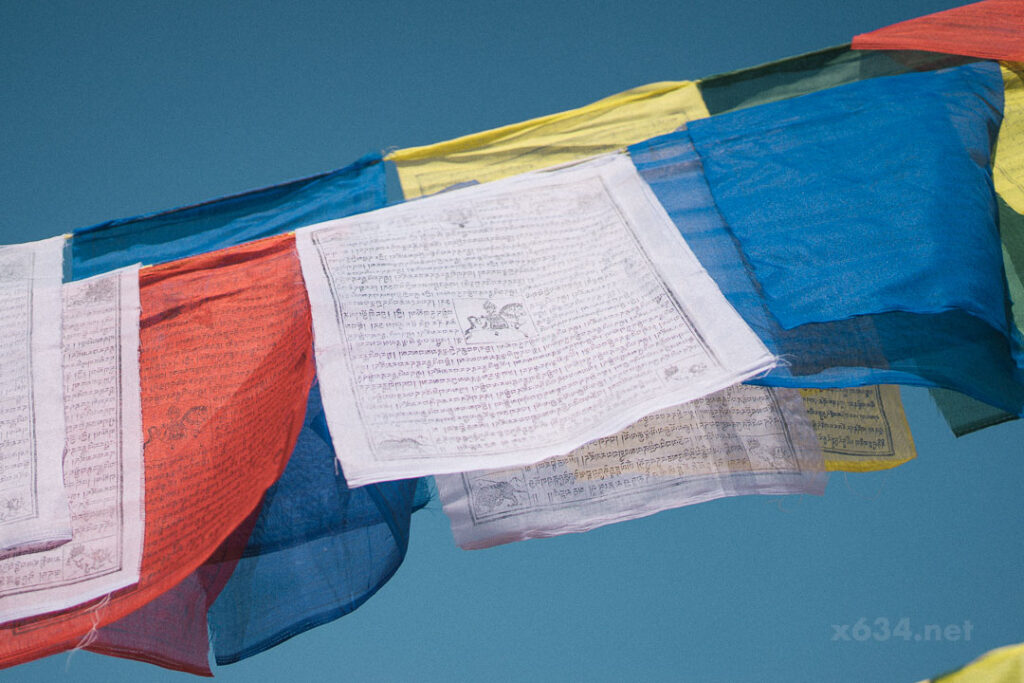
The countless colorful flags stretched from the stupa aren’t installed for Instagram photos. The five colors—blue, white, red, green, and yellow—represent sky, wind, fire, water, and earth. These flags are printed with prayers (sutras), and each time the wind blows, it carries those prayers on the breeze, spreading them. Not mere decoration, they function as a fully automated prayer system utilizing physical wind power. In terms of information dissemination, they’ve been functionally operating long before the advent of social media.
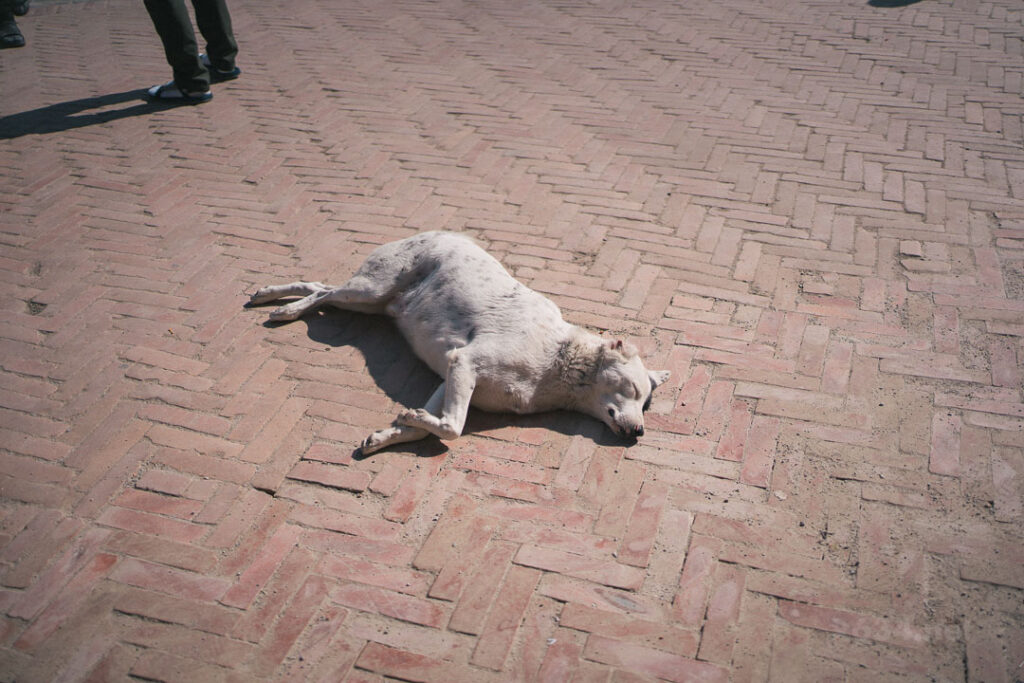
Around this stupa, where various prayers unite, monks, tourists, and stray dogs all walk clockwise. Circumambulating to the right is believed to accumulate merit, purify the mind, and provide salvation from the suffering of reincarnation.

I visited in November 2025. The temperature was just over 20 degrees Celsius—comfortable with a shirt and light windbreaker. In sunny spots it felt a bit warm, and while walking I wanted to strip down to just a shirt.
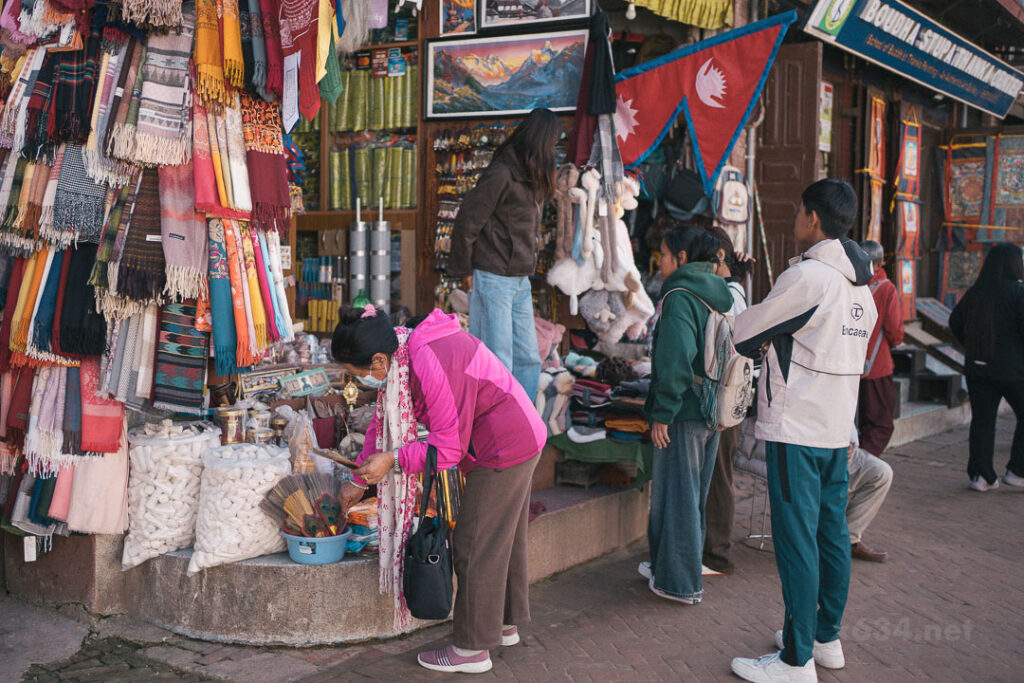
Souvenir shops and cafes line the stupa’s perimeter. Buddhist implements and items of unclear purpose are piled at storefronts, but no prices are displayed. I skipped them, not wanting to haggle.
Entering a cafe with rooftop seating, I had a good view of the stupa and the people continuously walking around it. Mountains surrounding Kathmandu were faintly layered beyond the buildings.
The coffee wasn’t particularly delicious. Still, I didn’t feel like leaving my seat for a while. Monks, tourists, dogs—all moving in the same circular pattern. The time I spent simply watching them turned out longer than expected.
■Location: Boudha, Kathmandu, Nepal https://maps.app.goo.gl/hmAhtHYEmj9hSipQA
■Classification: Tibetan Buddhist Stupa (UNESCO World Heritage Site)
■Height: Approximately 36m
■Transportation: About 20 minutes by taxi from Thamel area. Recommend using the inDrive ride-hailing app. Costs just a few $.
■Admission: 400 rupees for foreigners (as of 2025)
■Note: You can climb to the upper part of the stupa but must remove shoes, so black socks are recommended