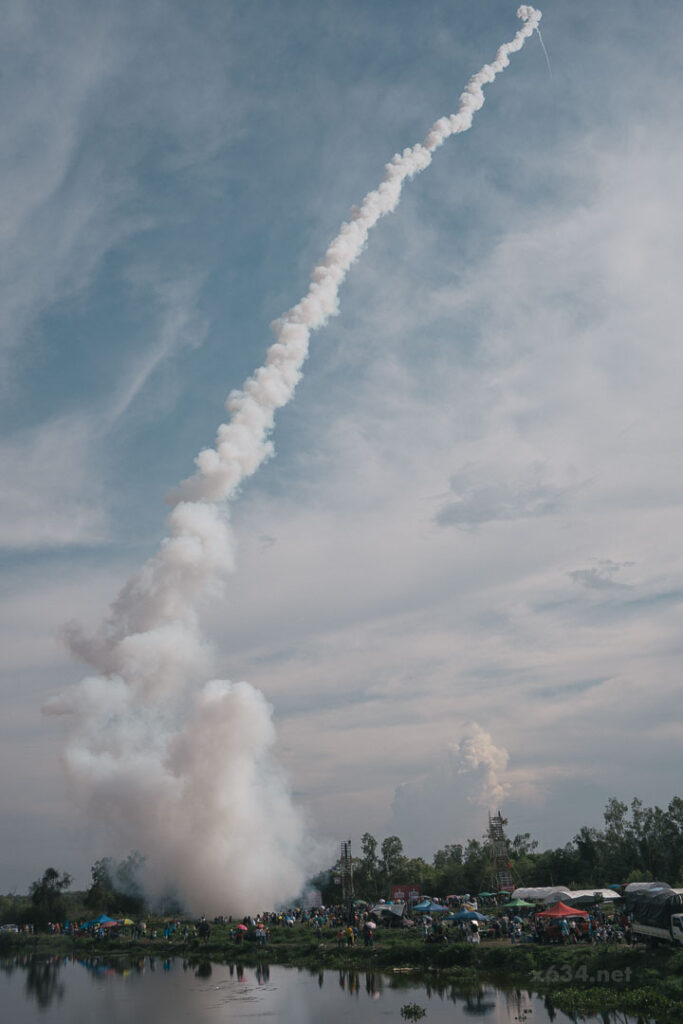
Homemade giant rockets launched to call for rain. When I heard about a festival in northeastern Thailand where they launch homemade rockets for rain, I had to see it.
In May, I landed at Ubon Ratchathani Airport, near the Laos border at the eastern edge of Thailand. It’s about an hour and a half flight from Bangkok. From there, it’s roughly a two-hour drive by rental car to Yasothon Province, where the festival takes place.
The rural roads of Isan, the northeastern region of Thailand. The concept of lanes seems loose, and the driving feels aggressive. (There are buses from Bangkok to Yasothon, but they take about 9 hours, and I was worried about getting around locally, so I rented a car.)
This rocket festival, Bun Bang Fai, means “bamboo filled with explosive power shot into the sky.” It’s held every May at the start of the rainy season. It’s a festival rooted in this region—northeastern Thailand and Laos—with Yasothon’s being the largest. Villagers launch handmade rockets skyward to call for rain.
The festival lasts three days. Day one is the opening ceremony, day two is the parade, and day three is the rocket launches.
I joined on day two, the parade. I headed to the main street. Yasothon is a small town. Normally it would feel like just another rural town, but not today. People are gathering on the main street. Mostly locals—tourists make up maybe 10% of the crowd.
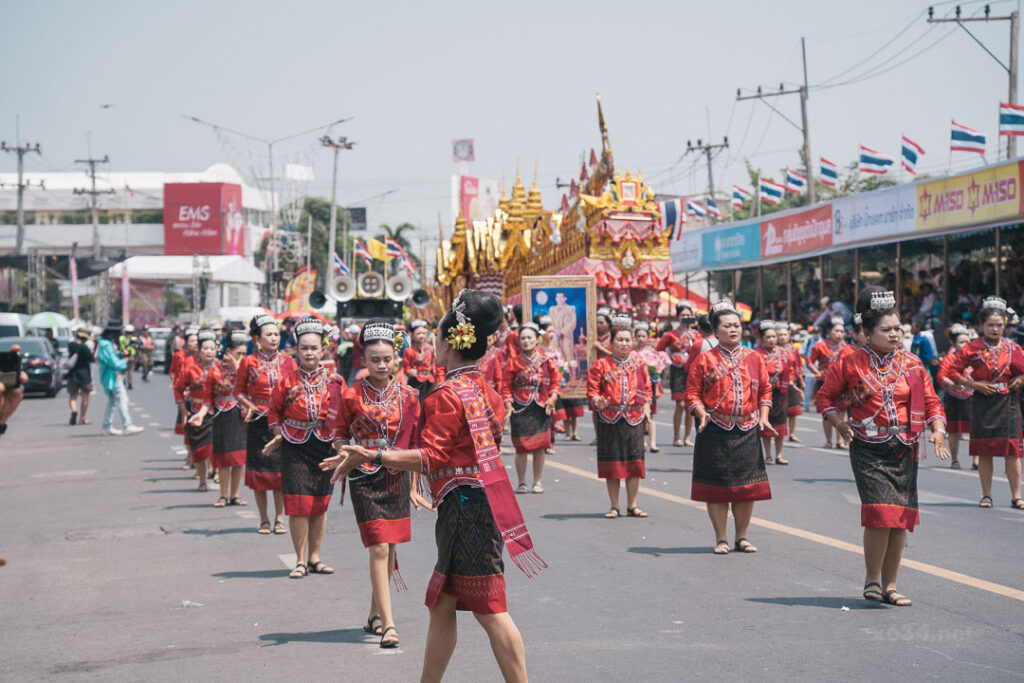
The sun is relentless. Incredibly hot. It’s late May, just before the rainy season. The temperature is over 35°C (95°F).
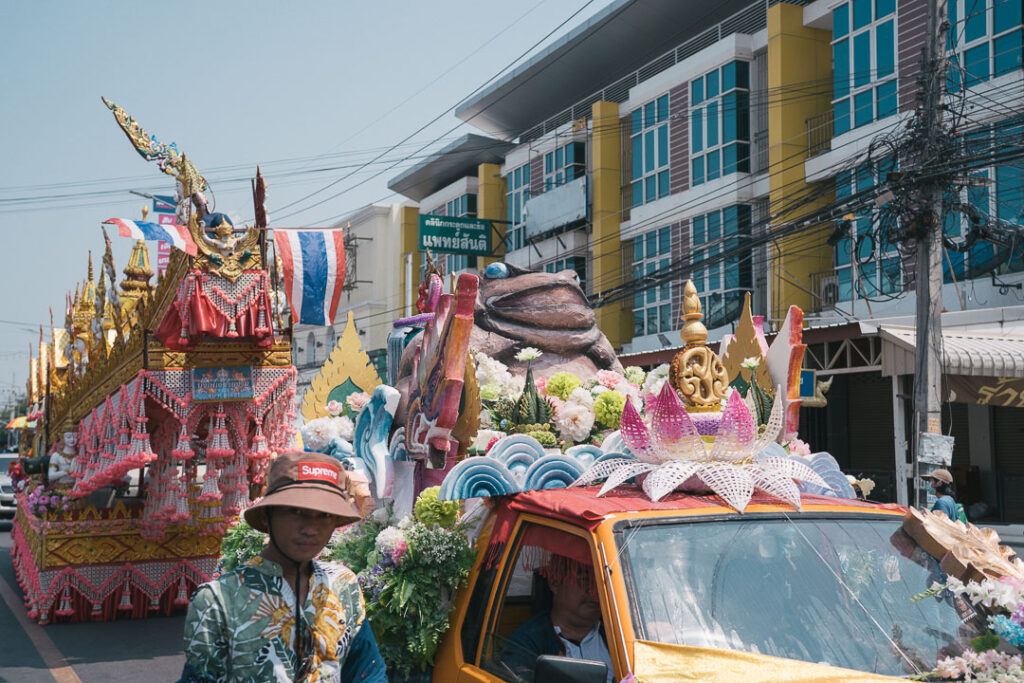
Distinctly Thai music blares, people cheer, elephants walk in the parade. Passing by the speakers, the sound pressure makes you want to cover your ears—it feels like bathing in the rural Thai tradition with your whole body.
The parade begins. Smooth dancing, floats, beauty pageant-style events with handsome men and beautiful women. The procession down the main street is more vibrant and energetic than I’d imagined.
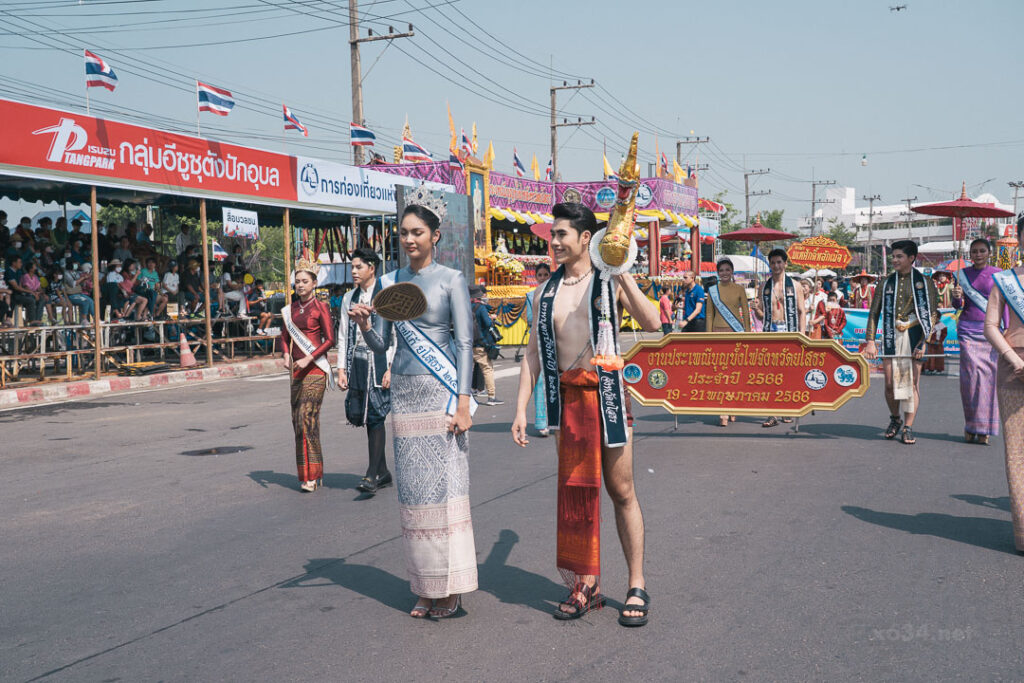
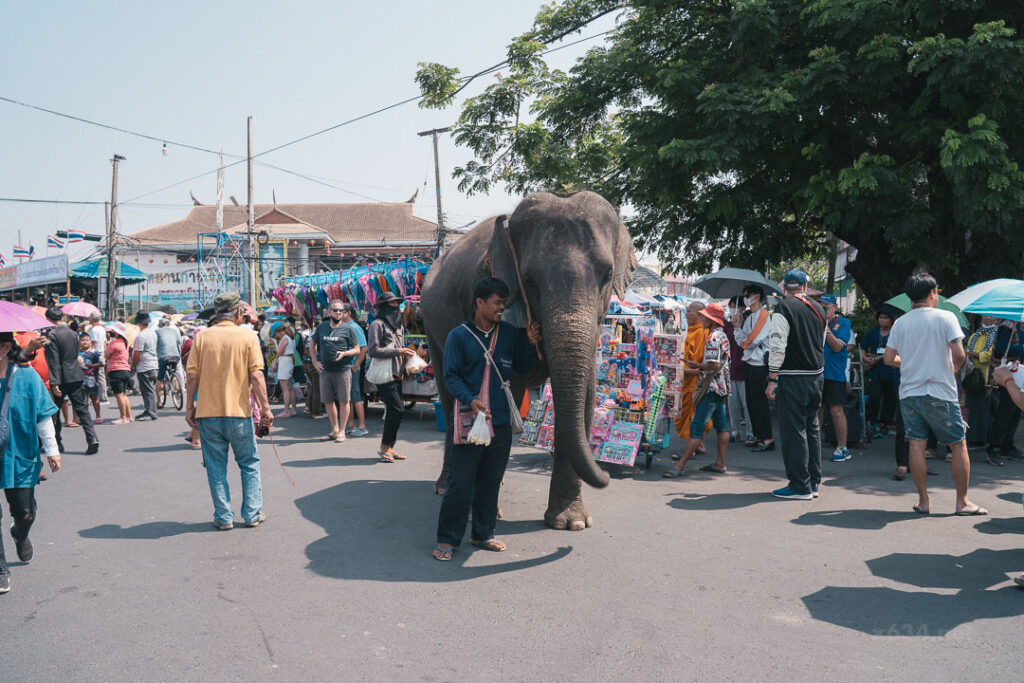
Day three. The rocket launch site is a large open space somewhere between an empty lot and a park, away from the town center. About a 30-minute walk from the main street. As I approach, the roar echoes.
Around the venue, stalls line up. Drinks, snacks, random trinkets—the usual.
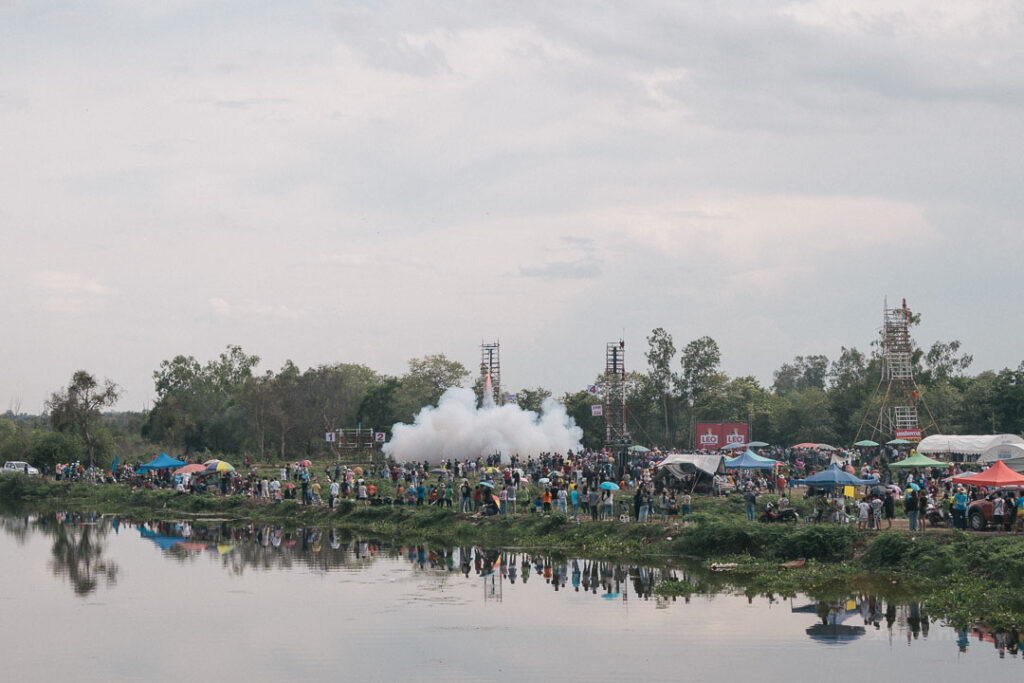
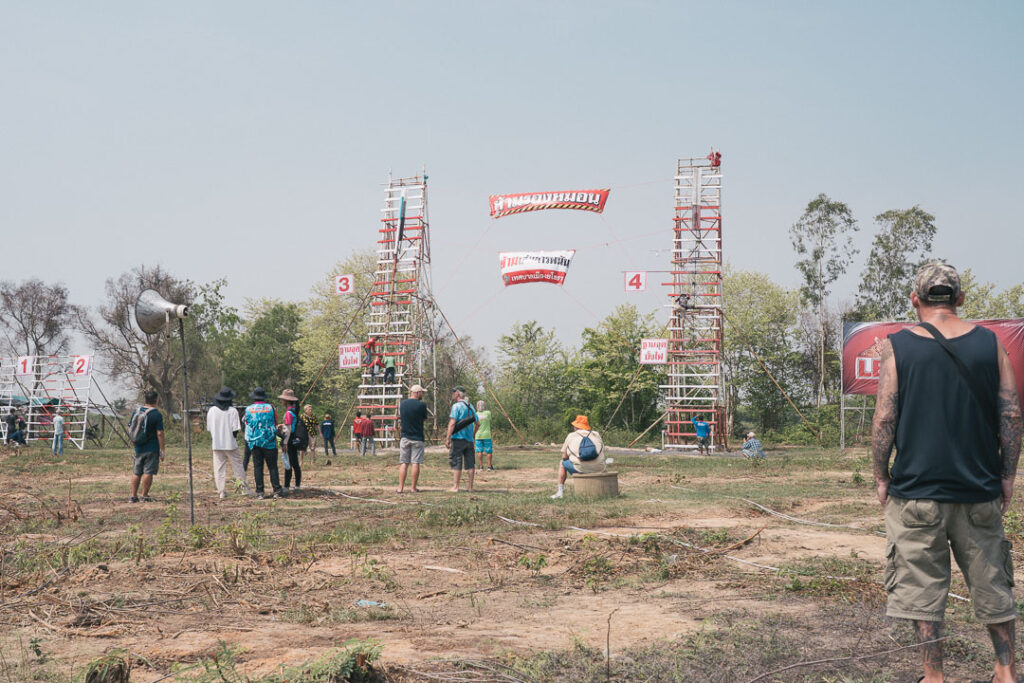
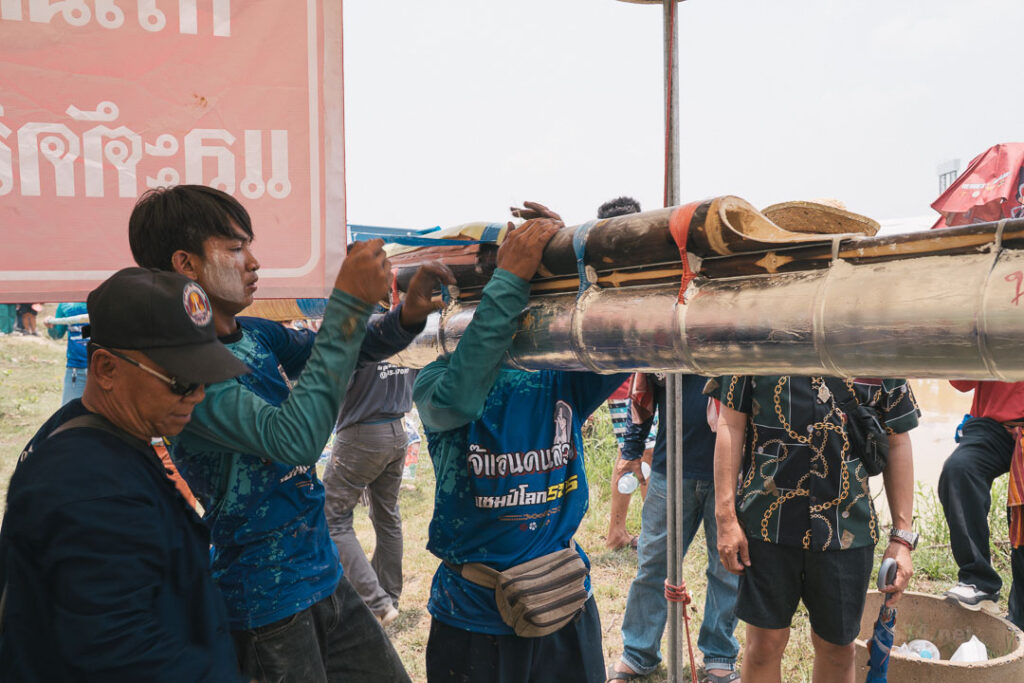
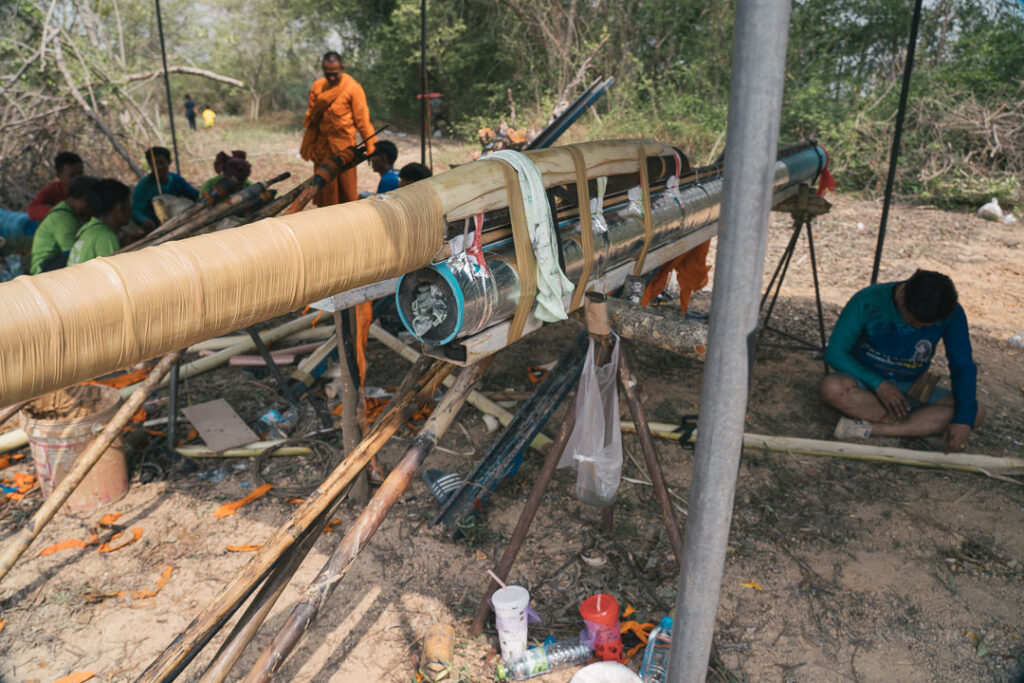
The rockets are surprisingly thin, yet huge. Over 100 kilograms each. Watching them being set on the launch platform is more serious than I’d imagined. Teams seem to be organized by region, each wearing matching T-shirts, watching over their rockets.
The next team begins preparing. Members climb the launch platform, adjust the rocket’s angle, check the attachment. Serious expressions, checking repeatedly, and finally, they pray. Every movement carries tension.
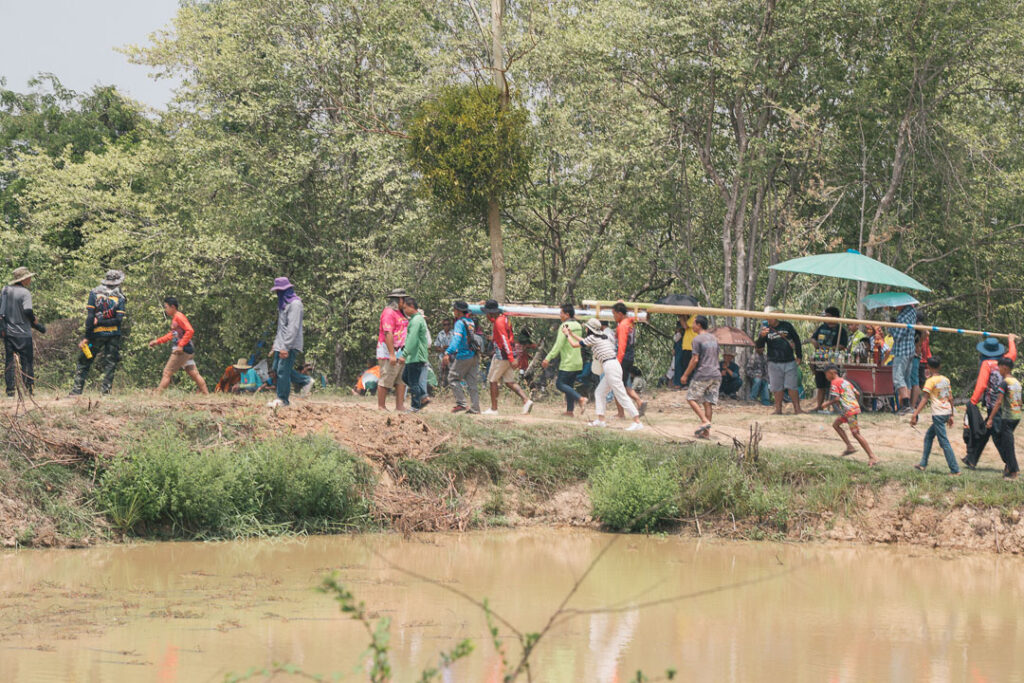
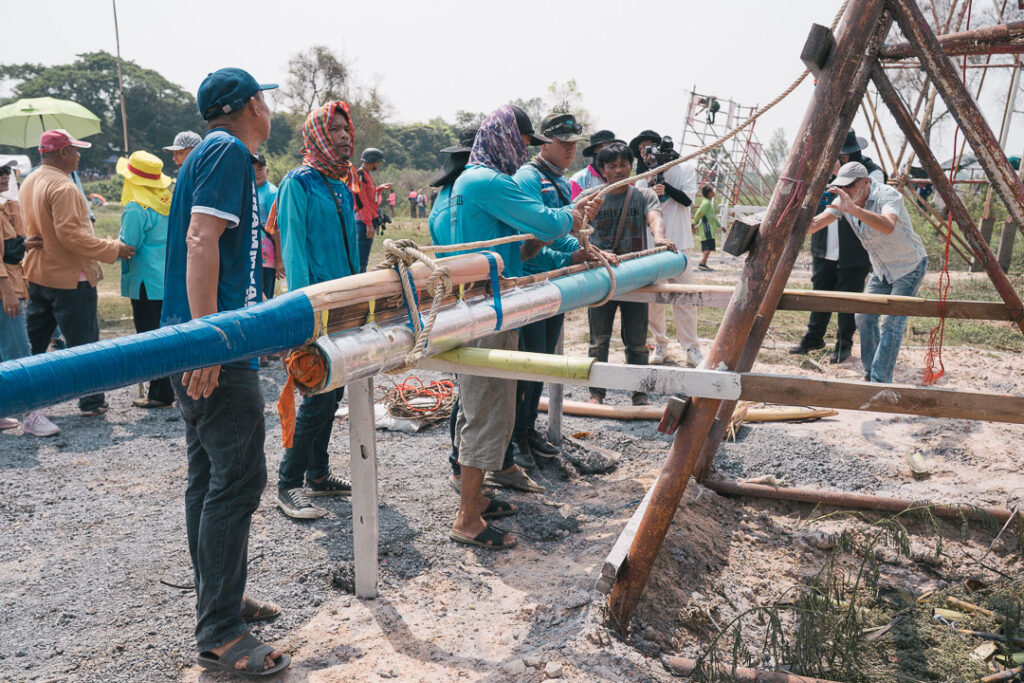
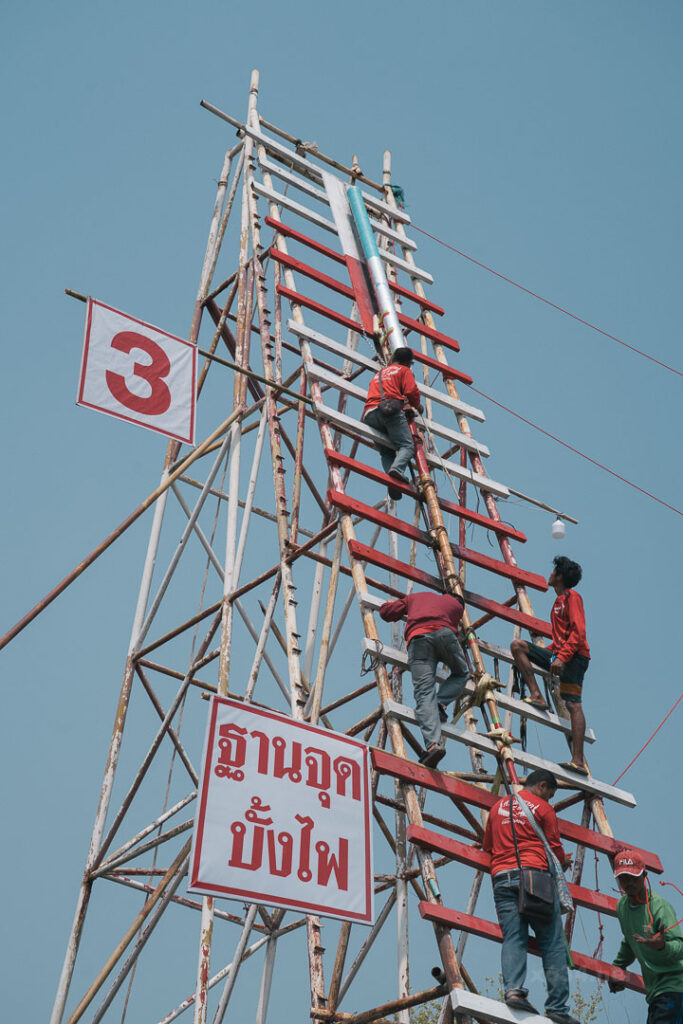
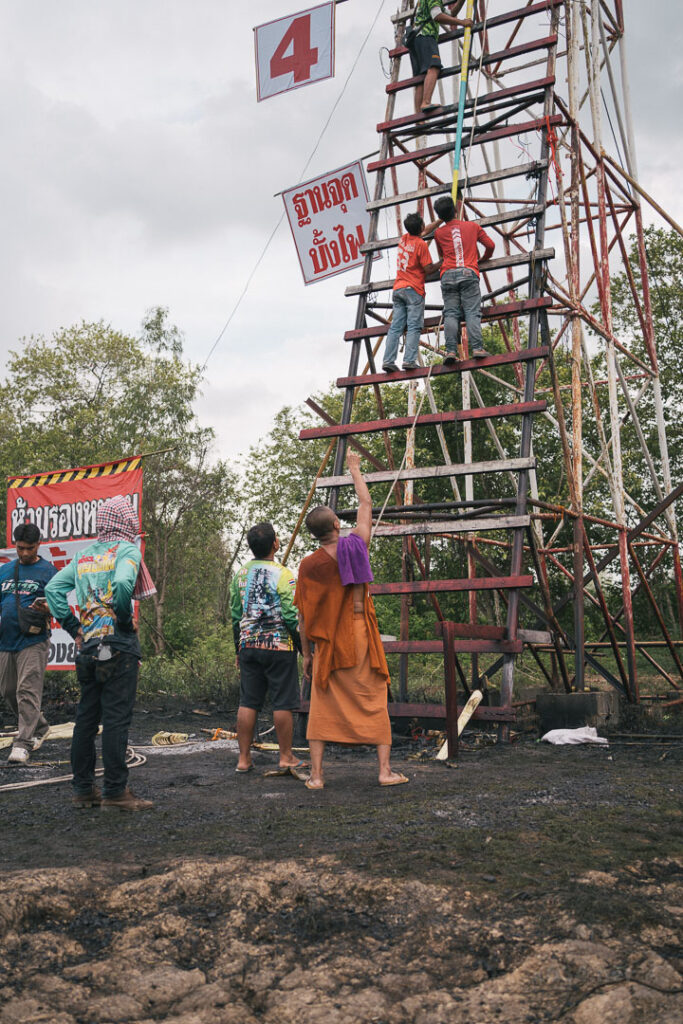
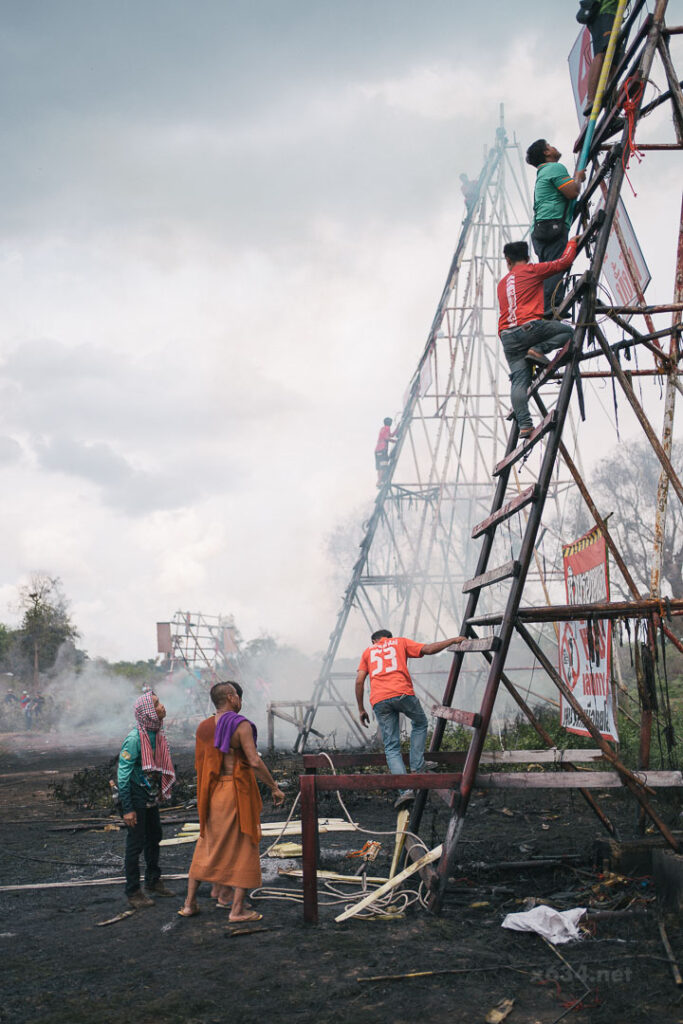
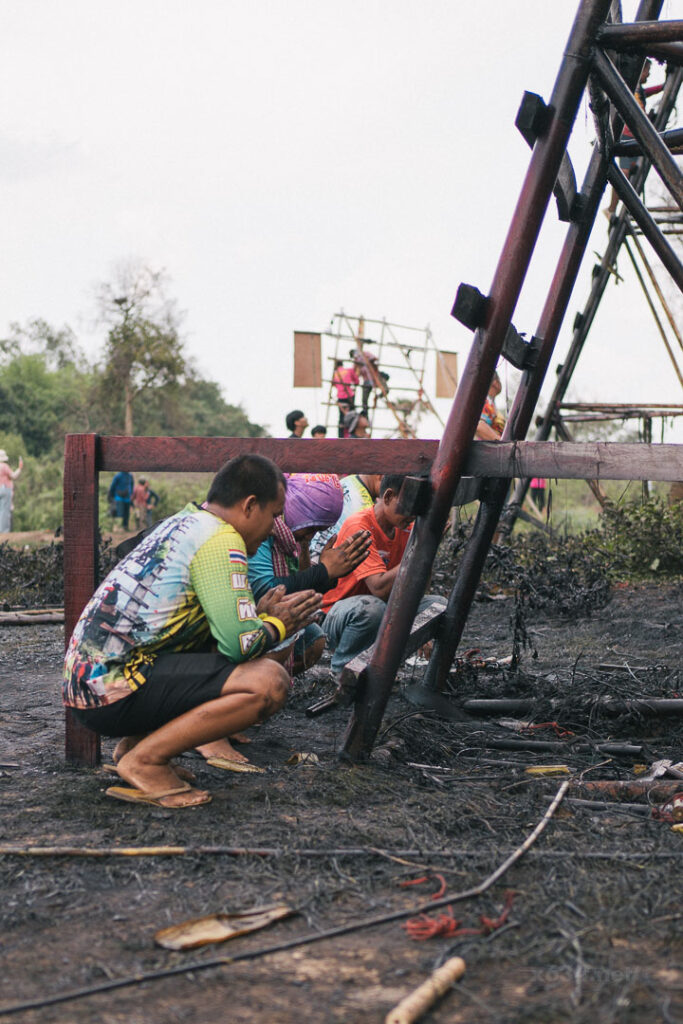
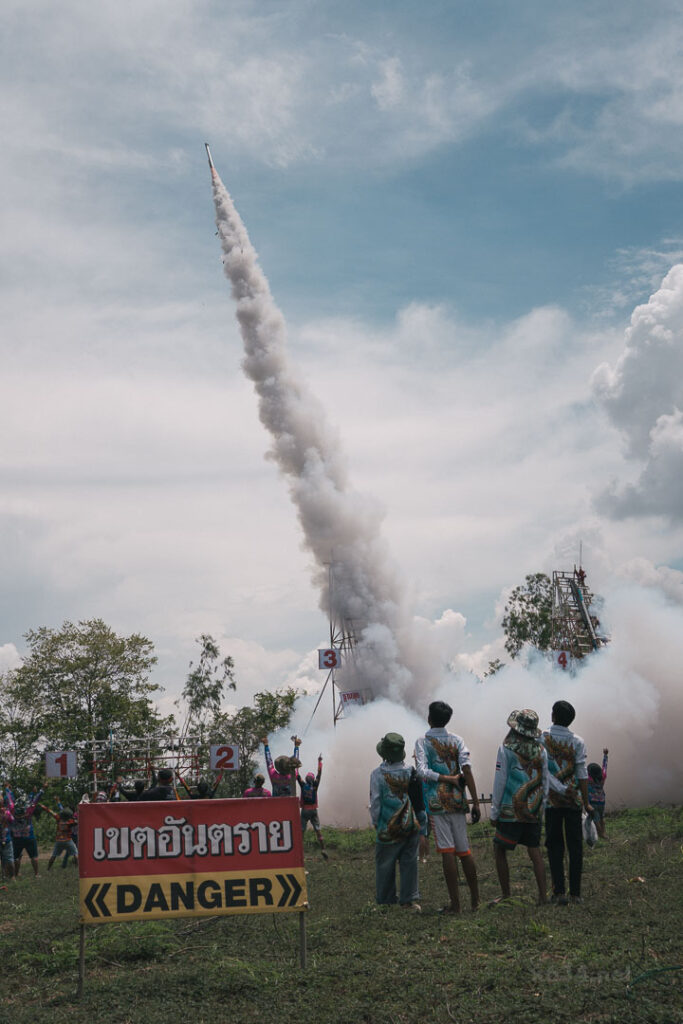
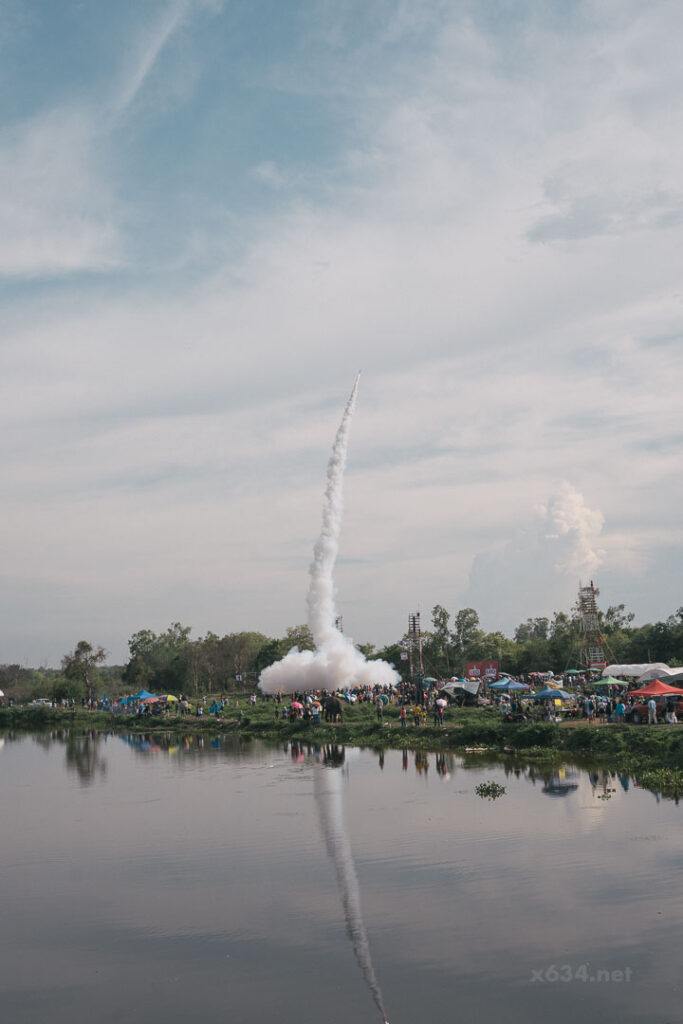
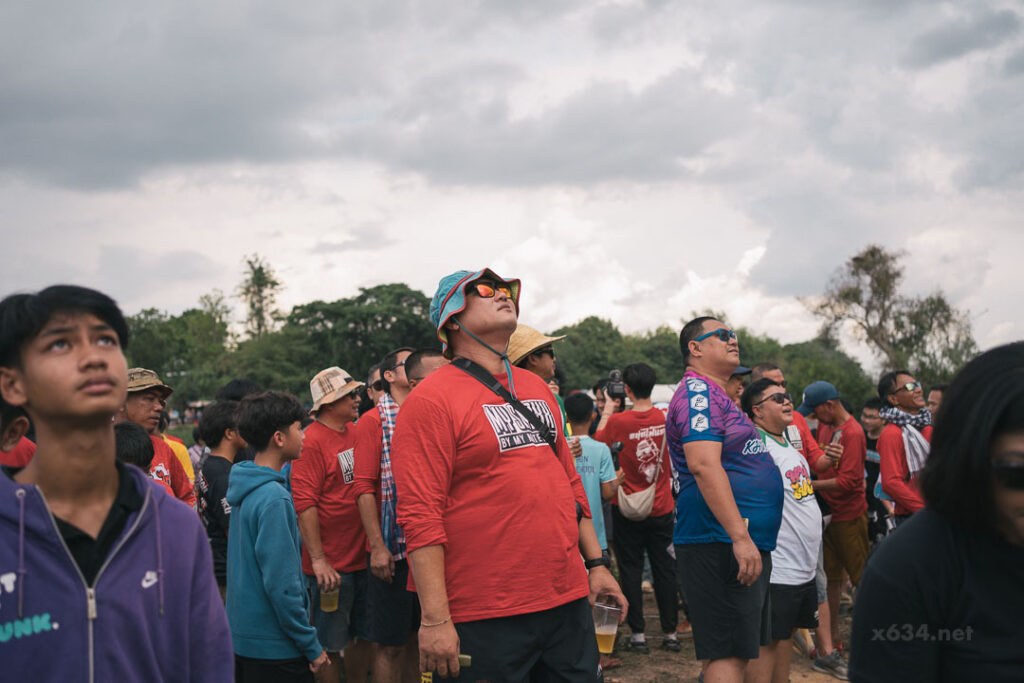
The moment of launch—a deafening roar, the smell of gunpowder and smoke envelop everything. The rocket shoots into the sky. Spectators tilt their heads back, watching how far it’ll fly. It keeps flying. Still flying.
I don’t know how far it went, but eventually, cheers erupt. Applause, shouts, smiles. Team members hug and jump. The tension releases all at once. Then comes the announcement of the flight time, and even more cheers spread.
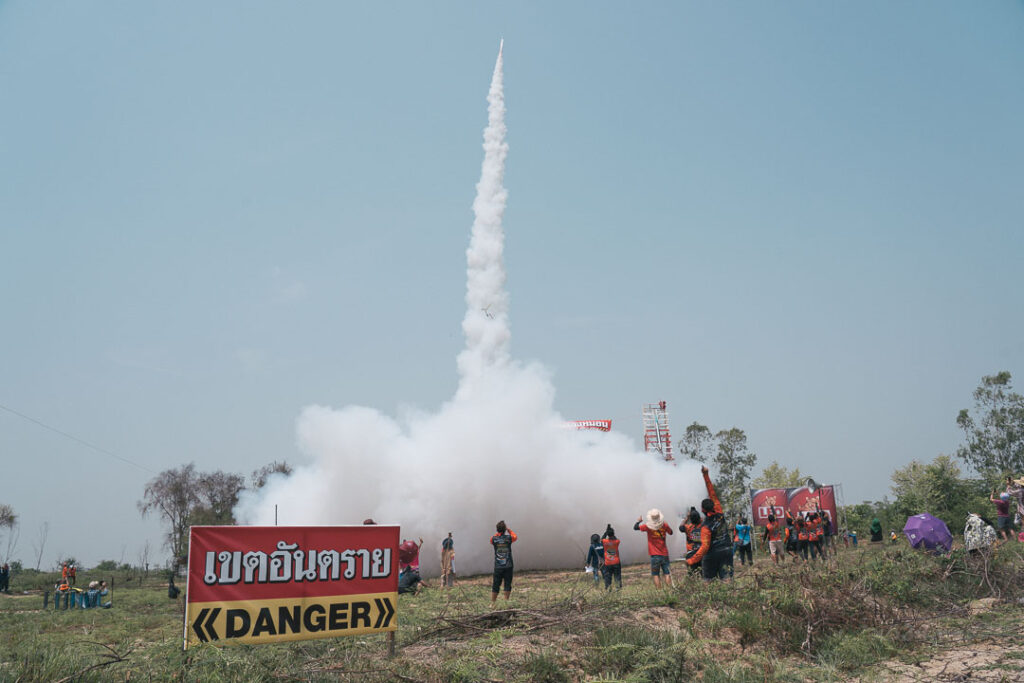
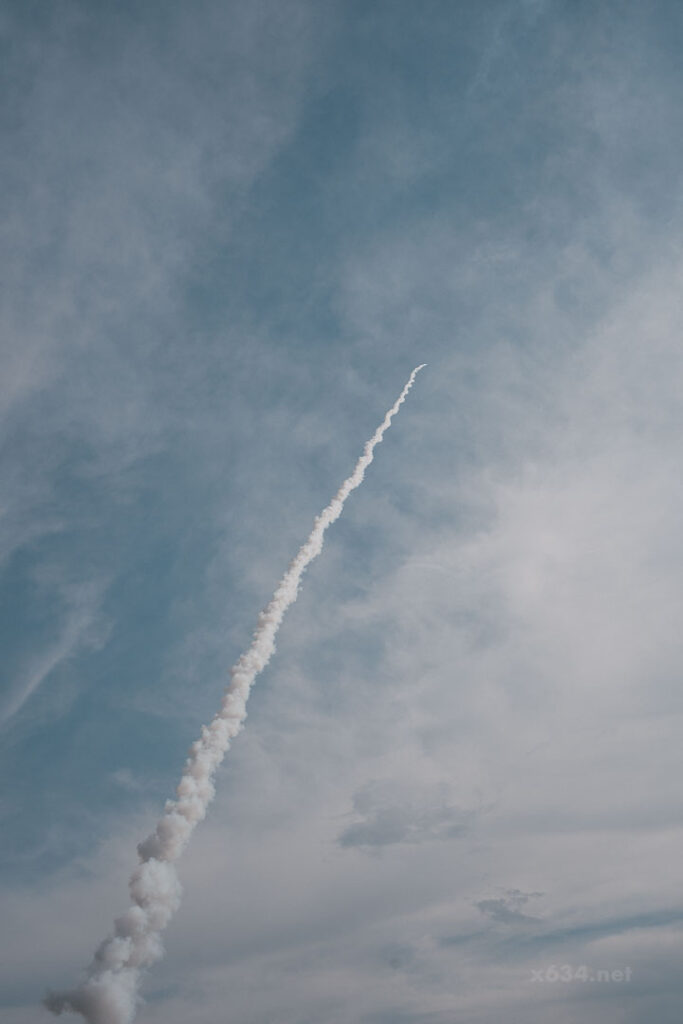
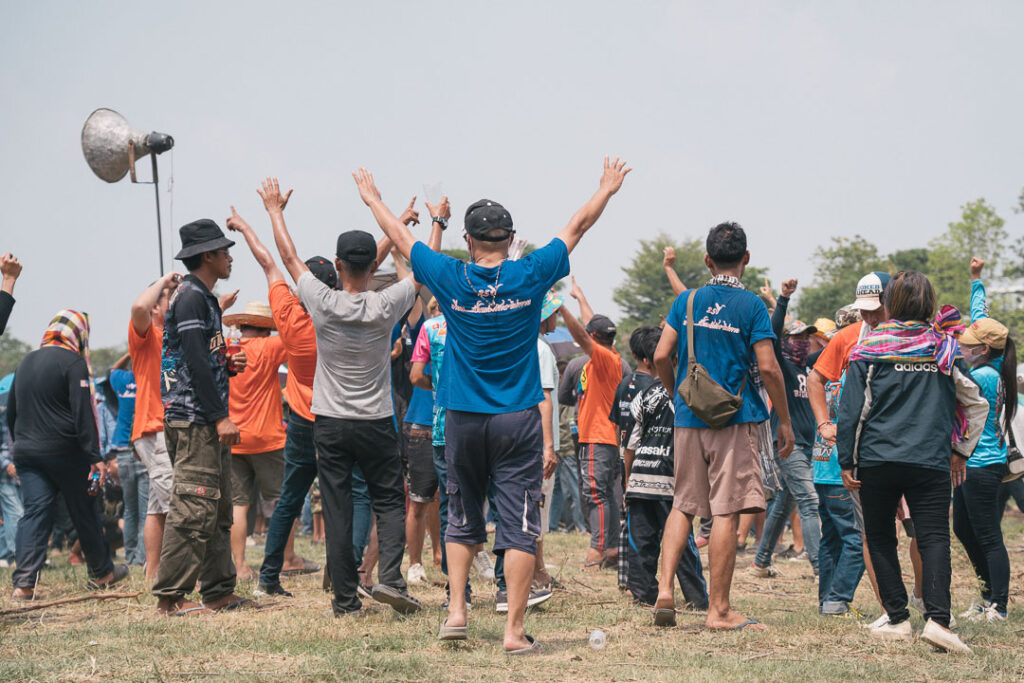
They’re competing on flight time. They fly until you can’t track them anymore—over three minutes in the air.
Launches happen about every 15 to 20 minutes. Each time, the same tension, the same joy repeats. This time, there were no failed rockets, but apparently, fires and even deaths have occurred in the past. Still, it continues every year.
Incidentally, if a rocket launch fails, there’s apparently a penalty game where you jump into muddy water. In reality, even when launches succeed, some spectators voluntarily jump in and get covered in mud.
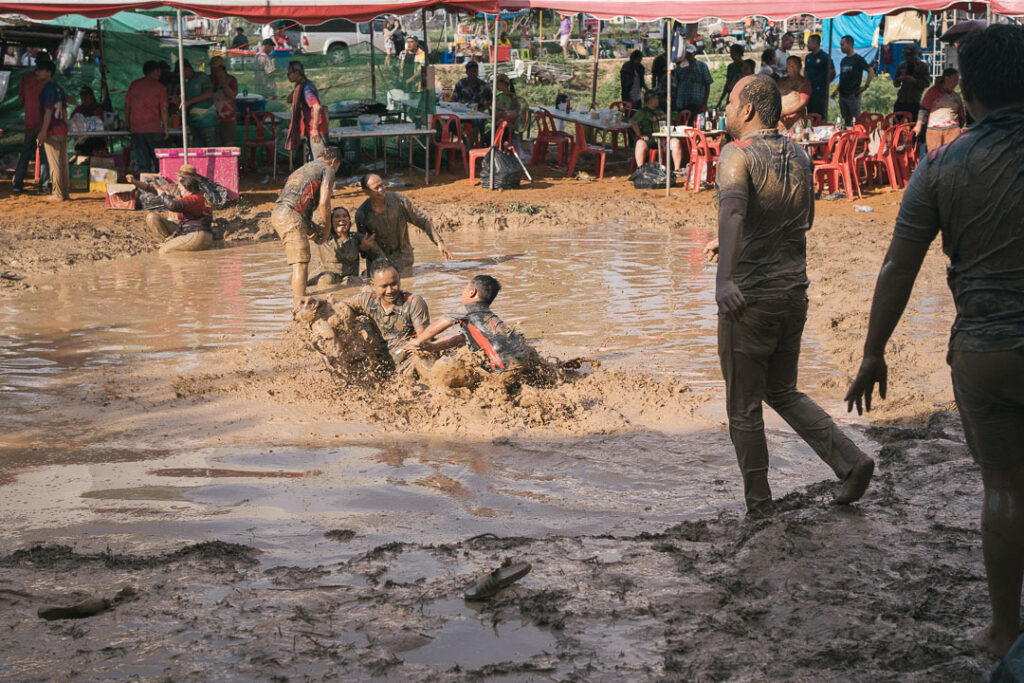
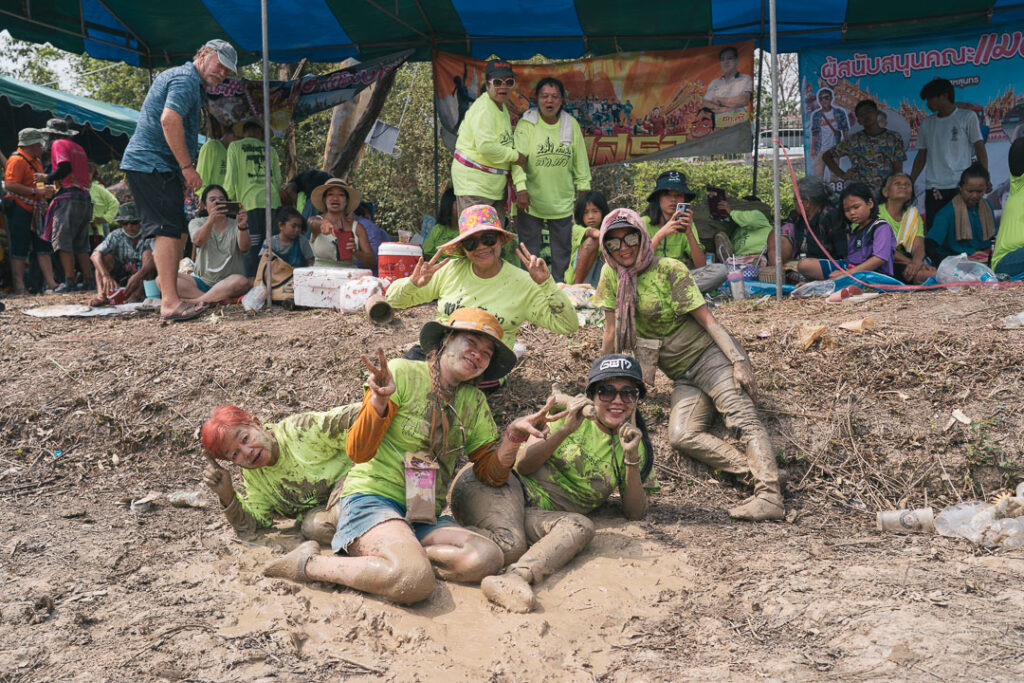
Competing on flight time, measuring records. It’s like a sport, but this festival has a real story behind it.
The day before the festival, I went to a museum-like facility about the rocket festival in town. There, giant statues of a toad and Naga (serpent deity) were displayed. About the size of Naruto’s summoning creatures—massive. Apparently, they’re connected to the rocket festival.
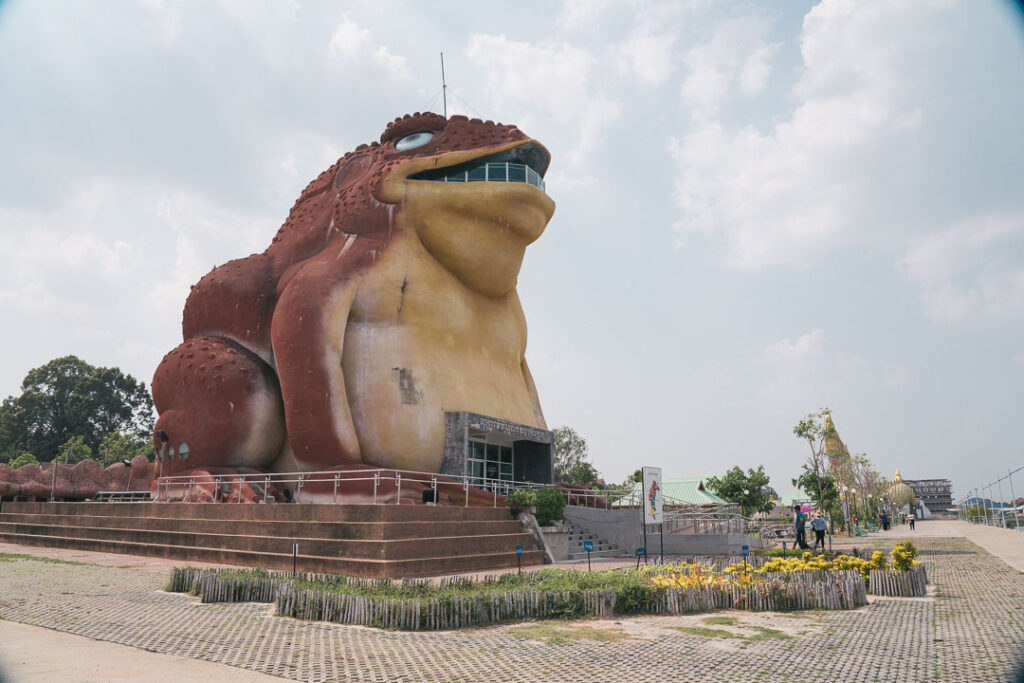
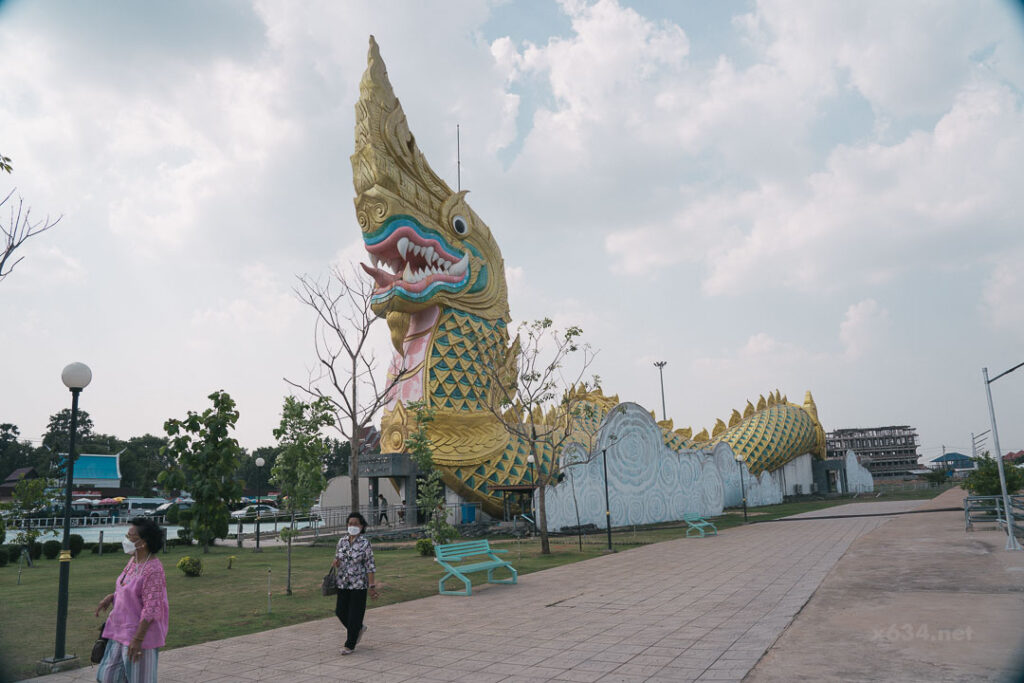
Behind this festival lies a myth about the Toad King (Phaya Kankak) and the Sky God (Phaya Taen).
Long ago, people worshipped the Sky God. But when the Toad King on earth became popular, people forgot about the Sky God. Angered, the Sky God refused to send rain, plunging the earth into drought.
The Toad King led Nagas and insects to storm the heavens and won. The defeated Sky God promised, “If you send a signal from earth, I will surely send rain.
That signal is the giant rocket modeled after the Naga. The rocket invokes the promise with the god, serving as a means of communication to the heavens to call for rain, launched every year at the start of the rainy season.
That’s the official story.
Walking around the venue, I see people clutching money. Handing over bills. When the flight time announcement comes, they pass bills as if high-fiving.
A banner reads “Gambling Prohibited.”
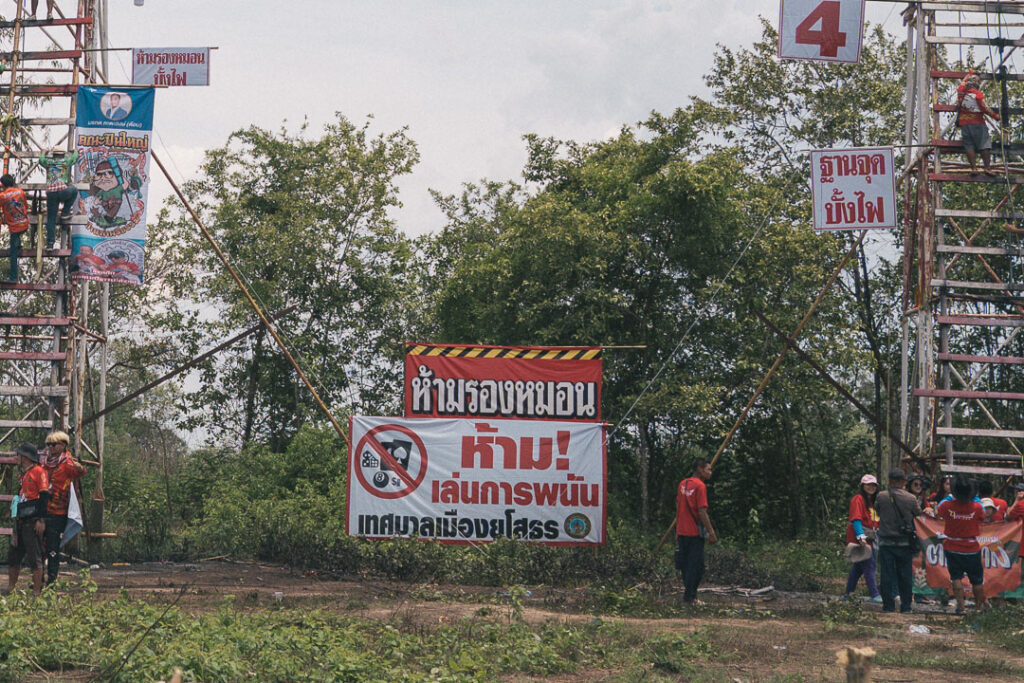
Ah, so that’s why they were so ecstatic. Why teams were hugging and jumping. It makes sense now. It’s not just prayers to the gods. Team prestige and cash are on the line.
There’s no dark atmosphere. Everyone’s drinking and having fun. Win or lose, when the next rocket goes up, everyone gets excited again. Faith and gambling, mixed together in the same space.
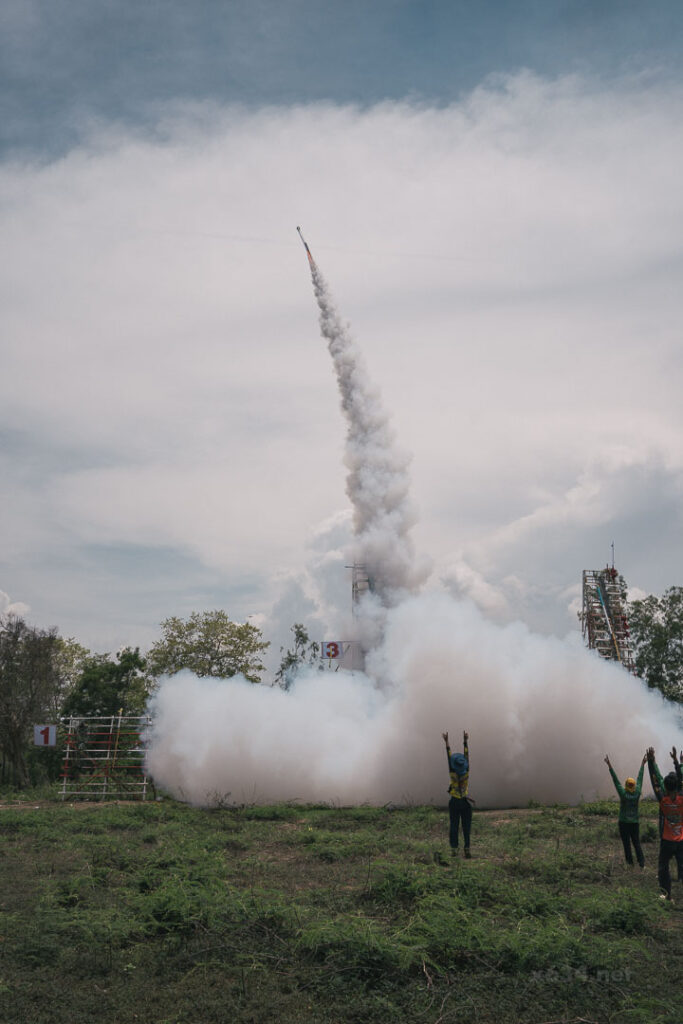
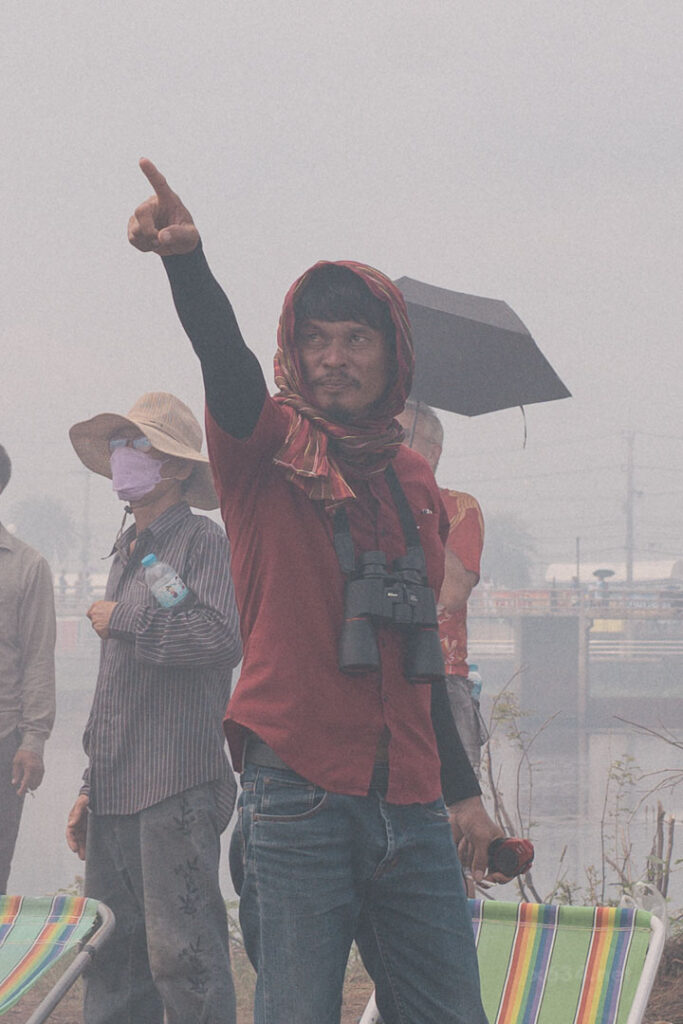
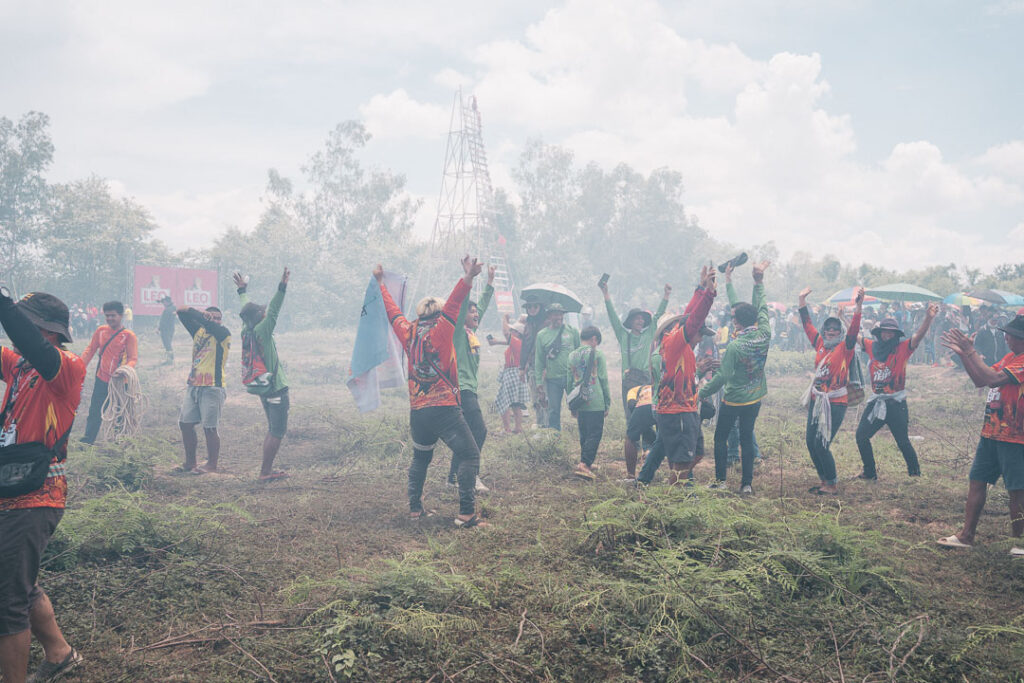
Faith or gambling? Ritual or competition? There’s no boundary.
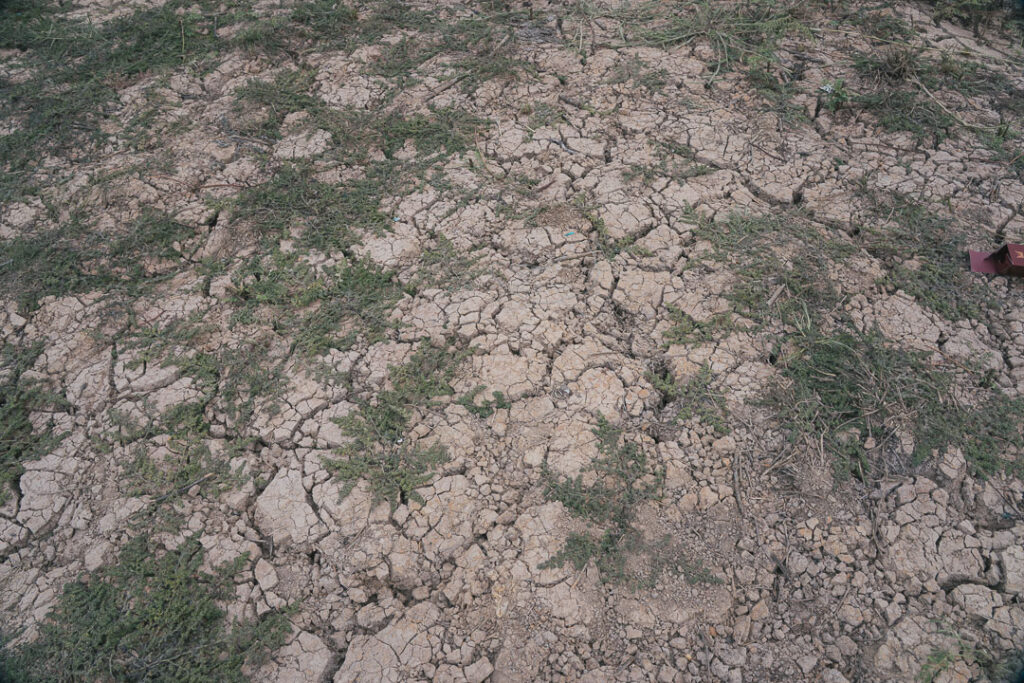
The day after the festival, the quiet rural town was back. The roar, the smell of gunpowder, the cheers—all gone. Walking down the main street, just some cleanup remnants. Just an ordinary rural town again. Daily life will continue until next year.
In the end, did it rain? Checking the weather forecast, it says the rainy season is about to begin. The promise with the Sky God seems to have been kept this year, too.
■ Official Name: Bun Bang Fai (Rocket Festival)
■When: Around the third week of May each year (dates vary, check in advance)
Reference:https://www.thailandtravel.or.jp/bun-bang-fai-rocket-festival/
■Location: Yasothon Province, Thailand
-Parade venue:https://maps.app.goo.gl/LZqVH4FJqcMaisfY7
-Rocket launch site:https://maps.app.goo.gl/kxSor59r5Uaqzxvy6
■ Access:
– About 2 hours by rental car from Ubon Ratchathani Airport
– Bus from Bangkok to Yasothon (about 9 hours)
■Accommodation: Hotel I stayed at https://maps.app.goo.gl/SyZgsA4SB7bnyVYh6
■Admission: Free
■ Notes:
– Extreme heat (over 35°C/95°F), sun protection essential
– Ride-sharing apps like Grab likely unavailable locally. Motorbike taxis operate—negotiate with hotel or shop staff and you’ll manage (requires determination)
– Gunpowder smell sticks to clothes, wear clothes you don’t mind getting dirty