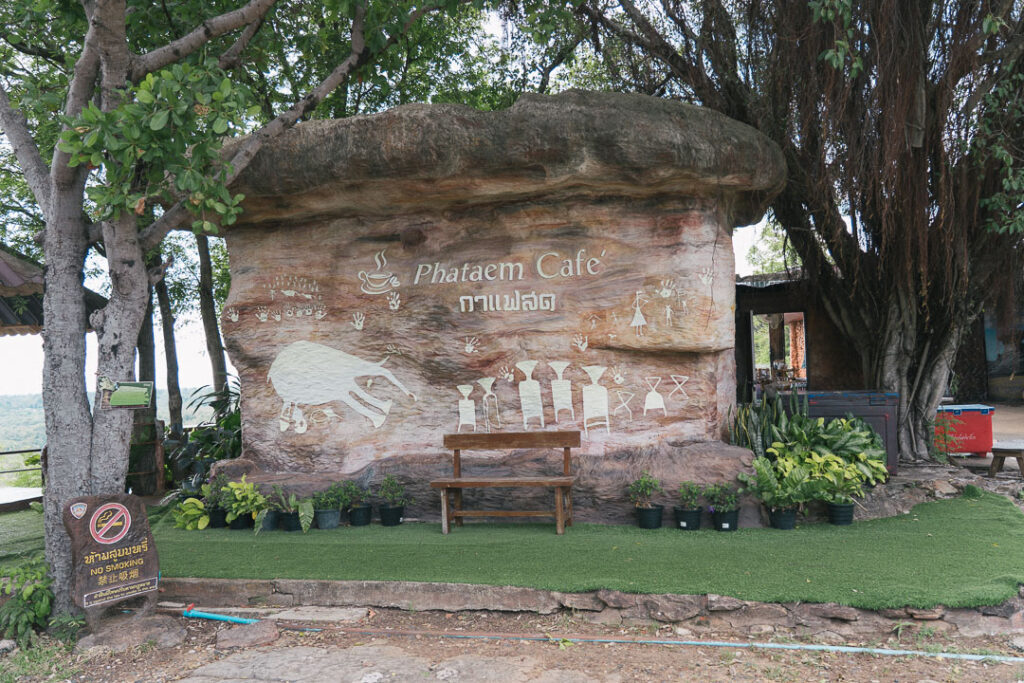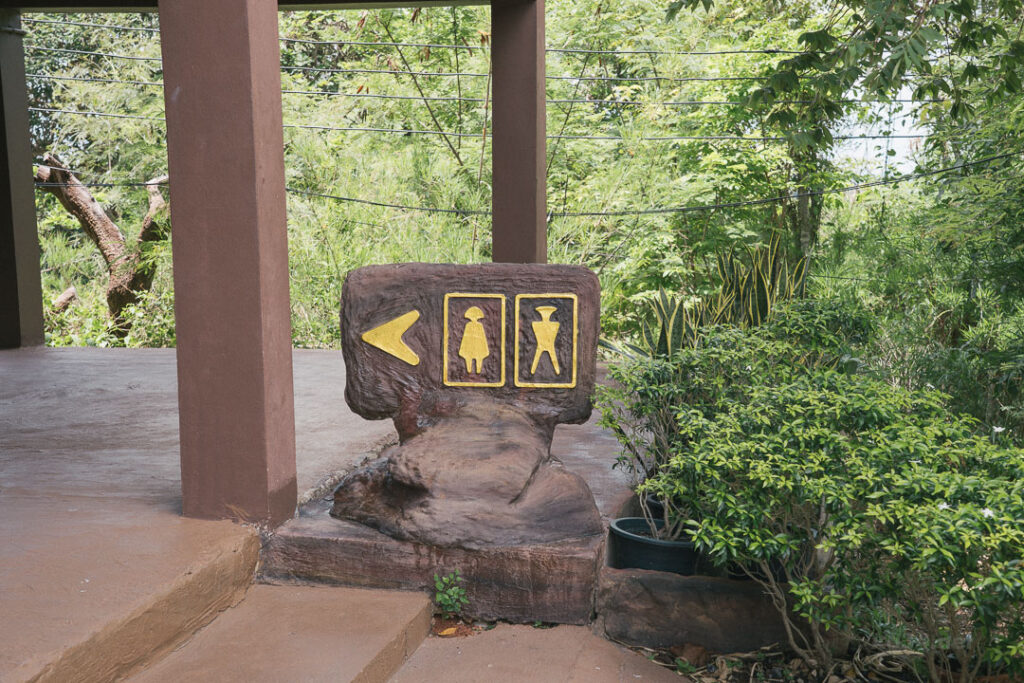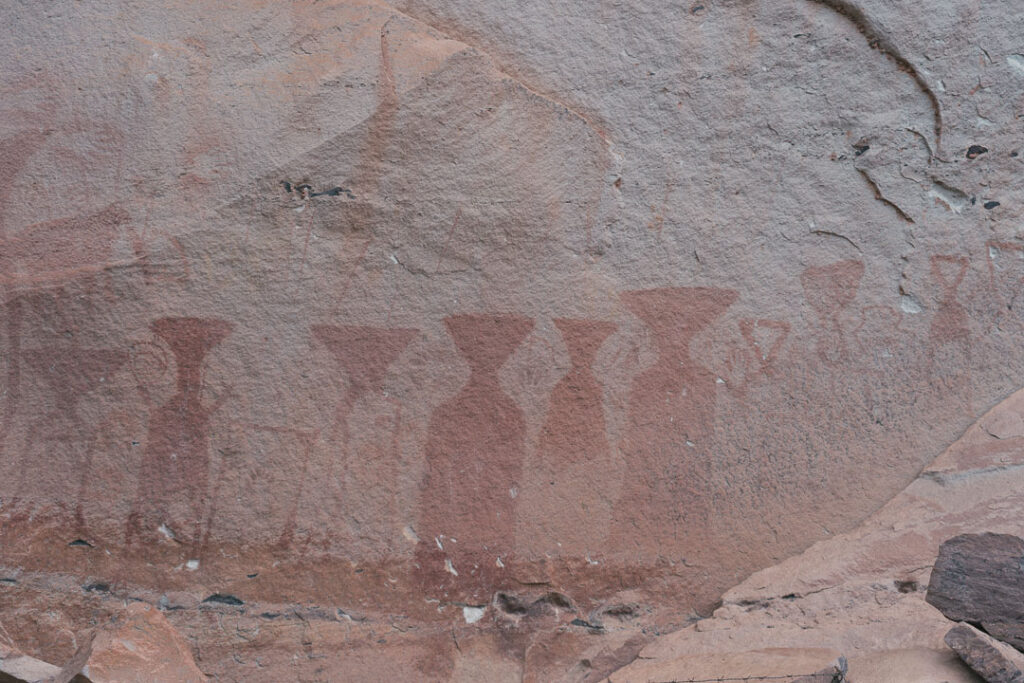
There are alien rock paintings.
I found this while researching a trip to Ubon Ratchathani, a town on the Laos border at the eastern edge of Thailand. A place called Pha Taem National Park.
One and a half hours by plane from Bangkok, then two hours by car. Not easy to reach. May is the hottest time of year in Thailand. The road from Ubon to the national park is a rural road with little traffic. Occasionally a pickup truck passes by, its bed loaded with both cargo and people.
By the time I got bored of the empty road, I arrived at the park. The parking lot is absurdly large, with only a handful of cars. Too hot, maybe. Stepping out of the car, it’s the kind of heat where you can’t walk properly without a parasol.
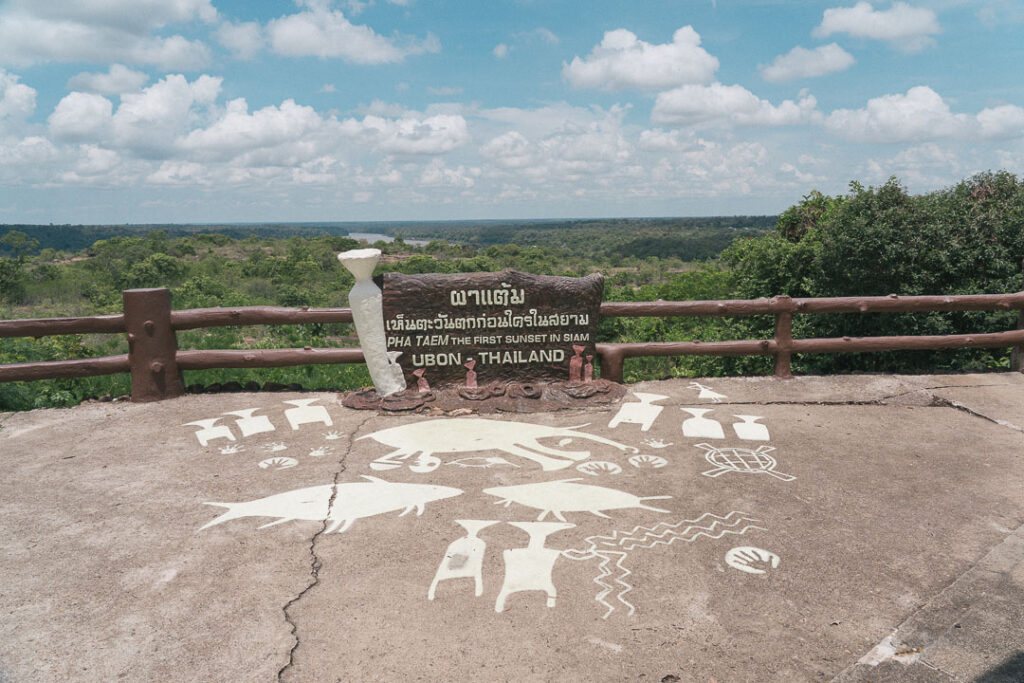
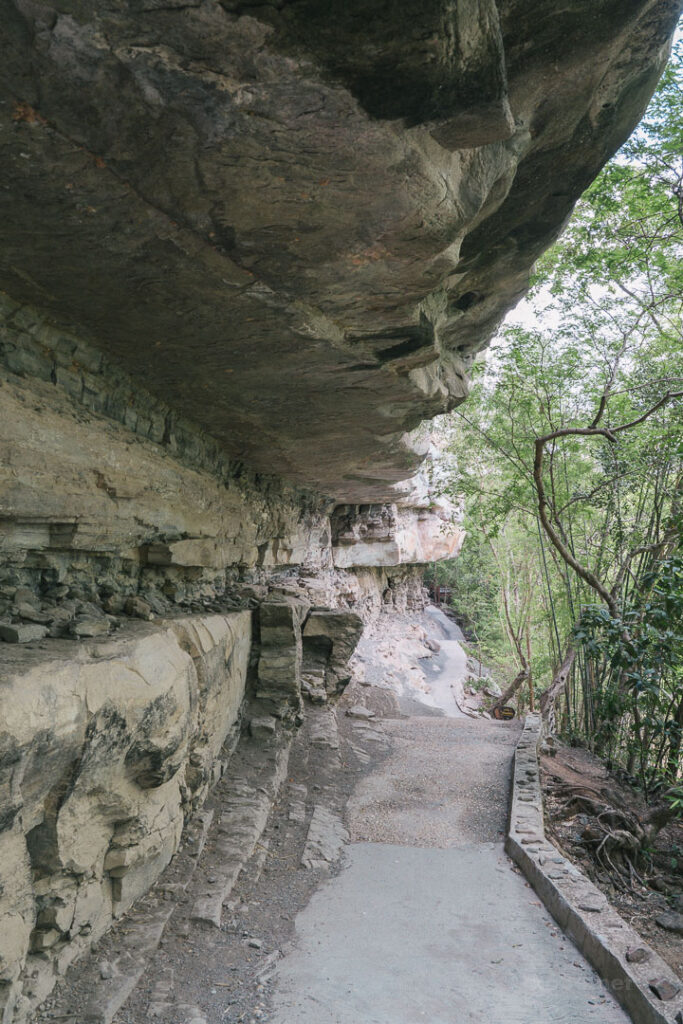
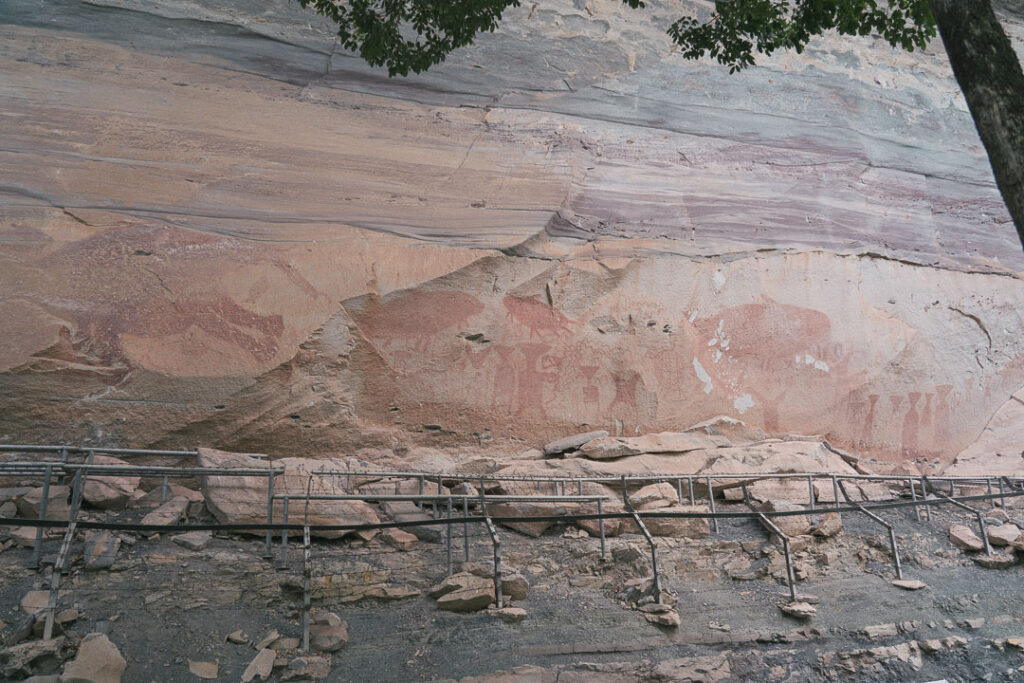
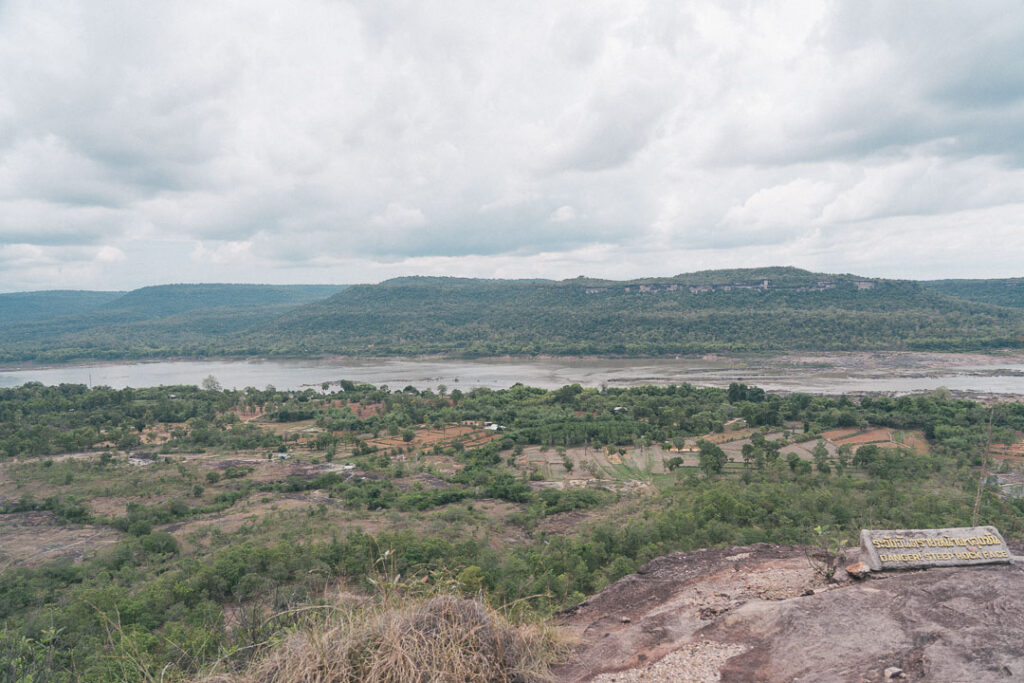
There’s a three-kilometer trekking course. Down the stairs, walking along the rock face. Cliff wall on the left, the Mekong River and Laos beyond it on the right.
The path is more or less maintained, but rocks sit randomly in the way and trees lean too far into the trail. Bugs fly around my face, and my T-shirt clings with humidity and sweat.
A few Thai couples are walking along, looking less like they came to see rock paintings and more like they’re just out for a stroll, glancing at the art in passing.
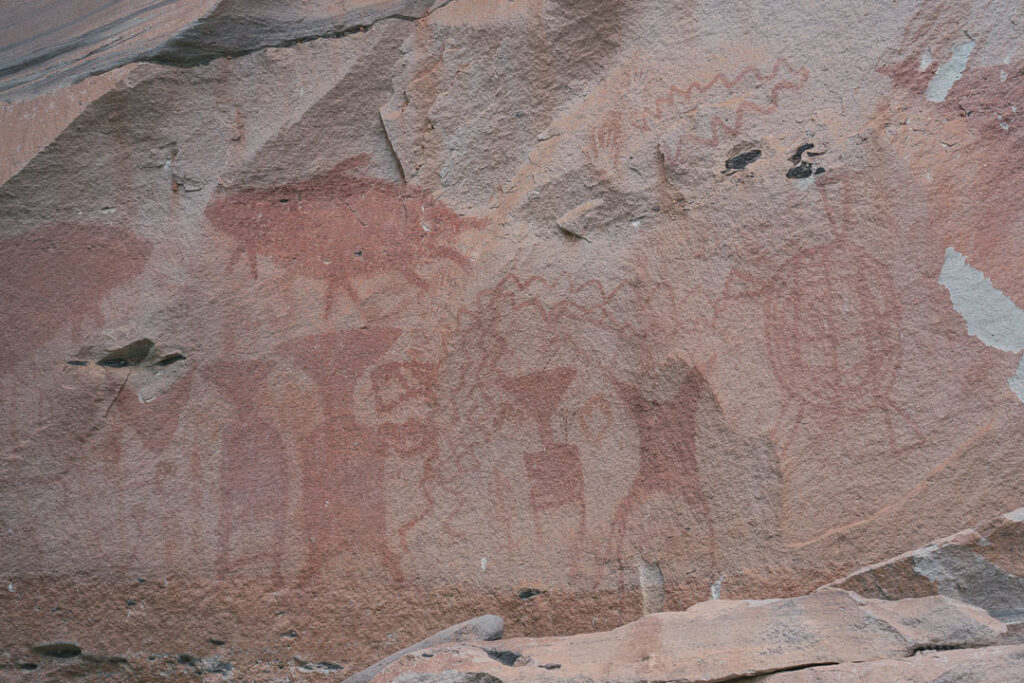
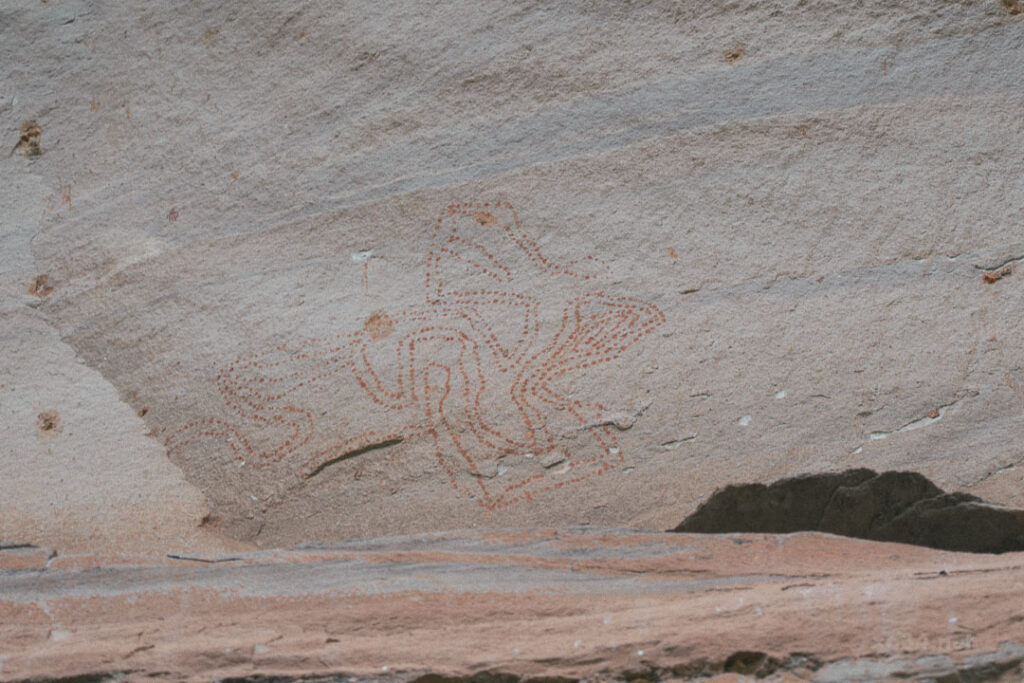
After a while, red figures appear on the rock wall.
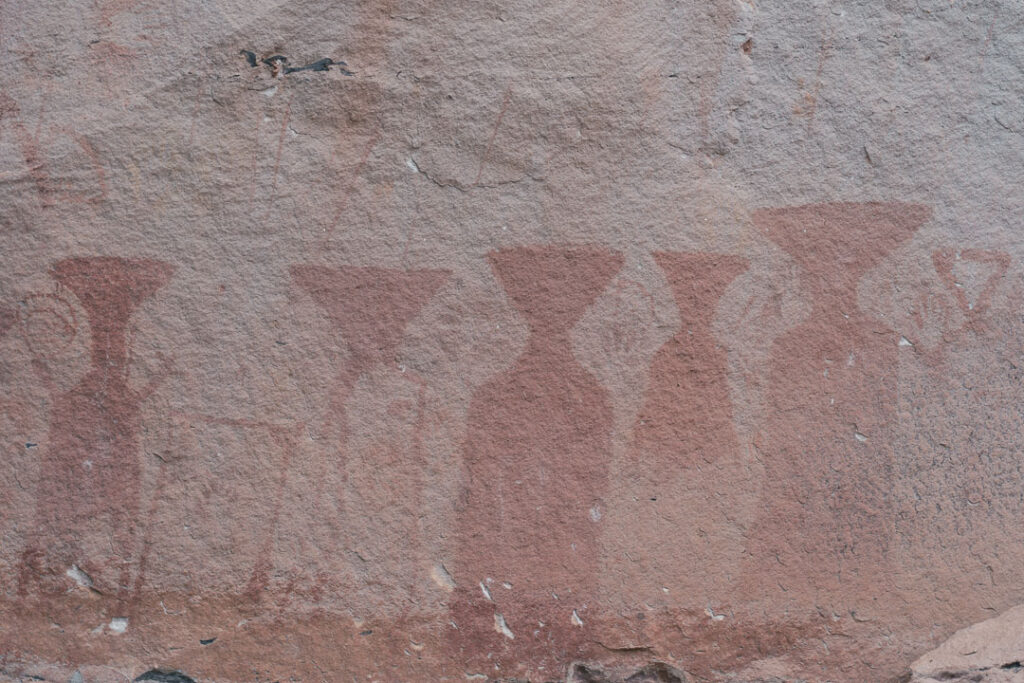
Totally aliens.
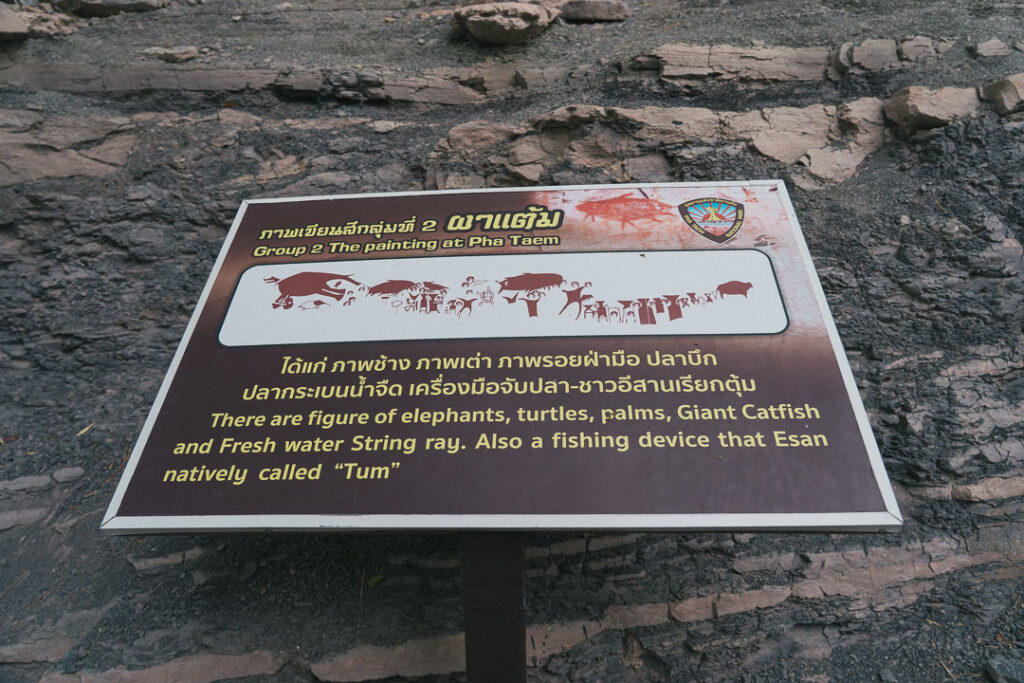
The information board says “fishing equipment.” The equipment is drawn in such detail it looks like a blueprint. Also elephants, turtles, and giant catfish. Records left by people who lived below this cliff 3,000 years ago.
The Mekong River flows just nearby. People who fished here 3,000 years ago painted this rock. Fishing continues in this river today, or so I’m told.
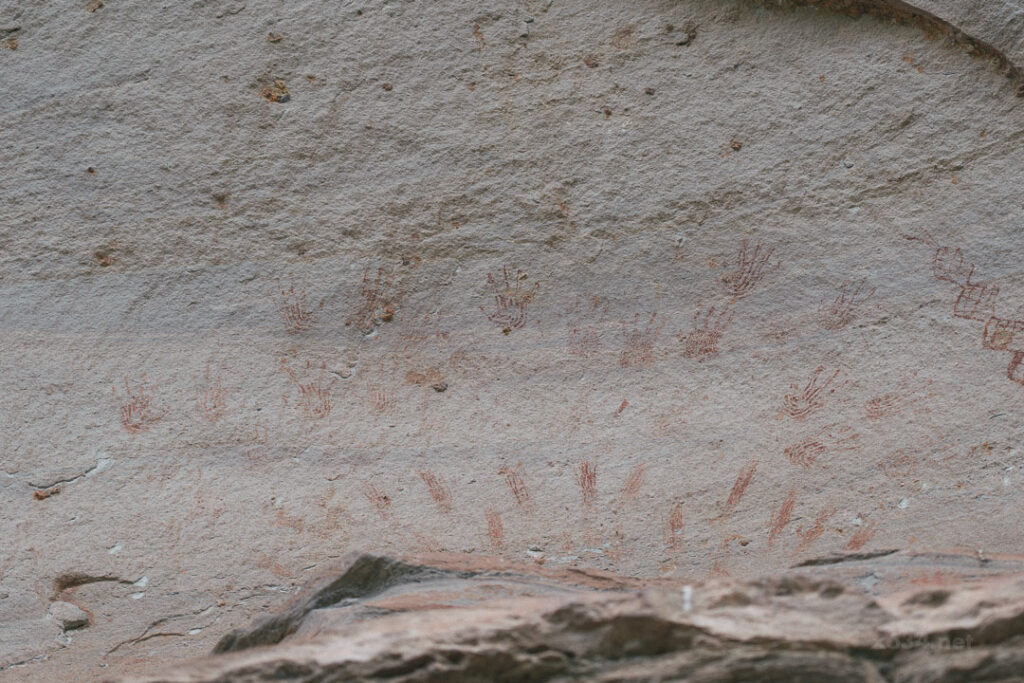
Rock overhangs above the paintings keep the rain off. The pigment is iron oxide—it doesn’t degrade further, and it has seeped into the rock, becoming one with it. That’s why it survived 3,000 rainy seasons in Southeast Asia.
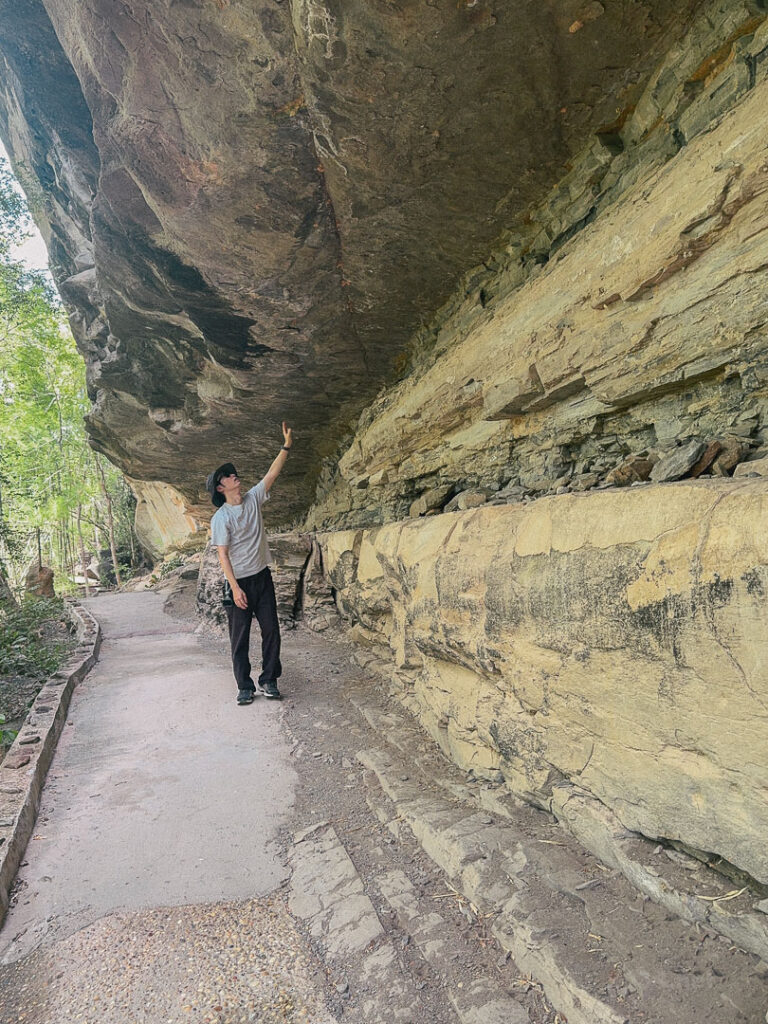
Handprints, too—many of them. Some pressed on with pigment-coated palms, others made by holding pigment in the mouth and blowing it over a hand placed against the rock. They overlap, from children to adults. There are also figures that seem to map the surrounding terrain. Maybe someone in the settlement left a record: “I was here.”
There’s a resting area in front of the paintings. The couples take photos with their phones, rest for a bit, and walk on.
I take a photo too. It won’t last 3,000 years, I think. Those paintings survived. This blog lives on a server. If someone in the future reads it, what kind of record would they think it is?
■Location:
・Khong Chiam District, Ubon Ratchathani Province, northeastern Thailand
・MAP https://maps.app.goo.gl/FwRJufycCbTZw5Jx9
■ Access:
– About 1 hour 15 minutes by air from Bangkok to Ubon Ratchathani Airport
– About 100 km from Ubon city (1.5–2 hours by car). Public transport is scarce; rental car or chartered vehicle is realistic (charter estimate: 1,500 baht+/day plus fuel)
■ Admission:
200 baht (adults) / 100 baht (children)
■ Hours:
6:00–18:00 (open daily)
■ Best Season:
November–February (dry season, relatively cool)
■ Notes:
– The cliff trail is completely exposed and brutally hot. Water and a parasol are essential – The painting trail is about 3.4 km with rocky terrain and stairs—sneakers recommended
– Bug spray reduces the suffering
■ Nearby:
– Sao Chaliang: “Mushroom rocks” near the park entrance—bizarre formations shaped by hundreds of millions of years of erosion
– Known as “the place where the sun rises earliest in Thailand”
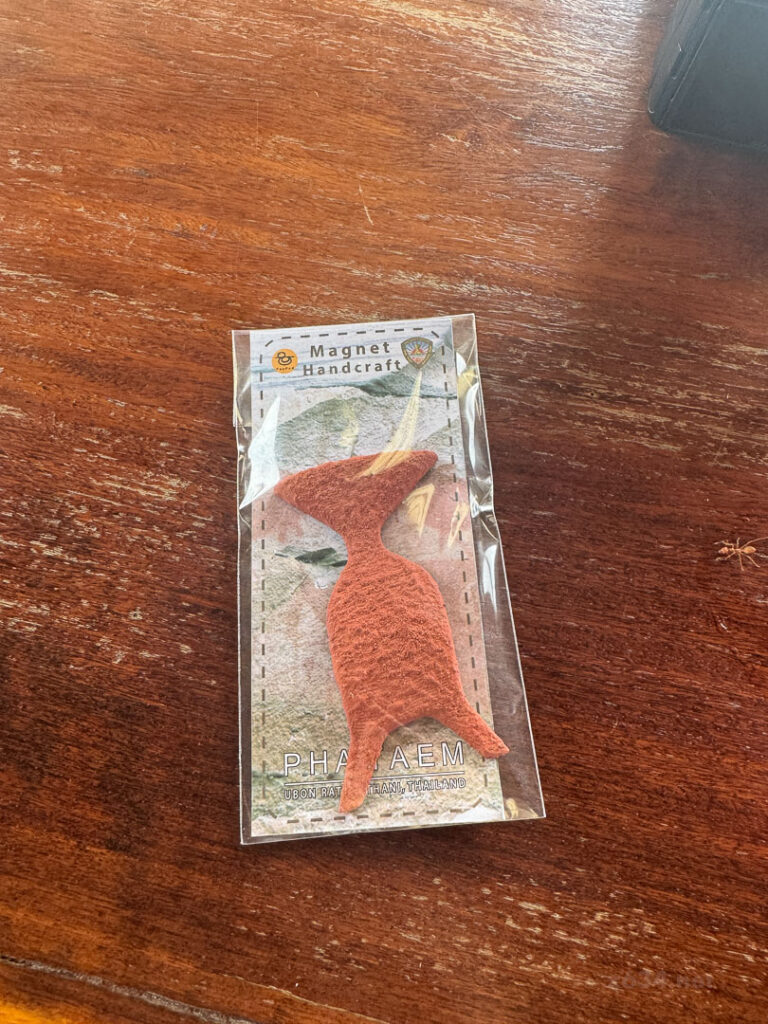
Extra: Got a cute magnet at the small souvenir shop.