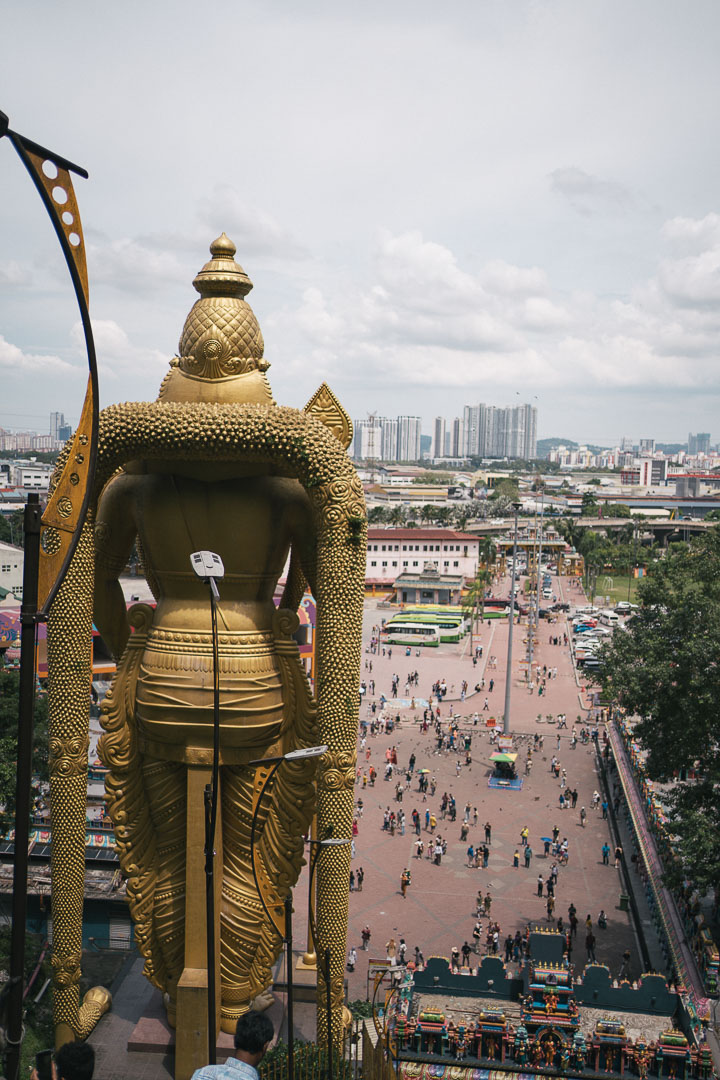
A cave formed 400 million years ago. Batu Caves, Malaysia. Malaysia is an Islamic country, but this cave has become one of the most important Hindu sacred sites outside of India.
I believe that sacred places are cooler the older they are. There’s a romance to the accumulation of history. A sacred site, 400 million years old. Hard not to get your hopes up.
Thirty to forty minutes by Uber from central Kuala Lumpur. Clear skies. Humid.
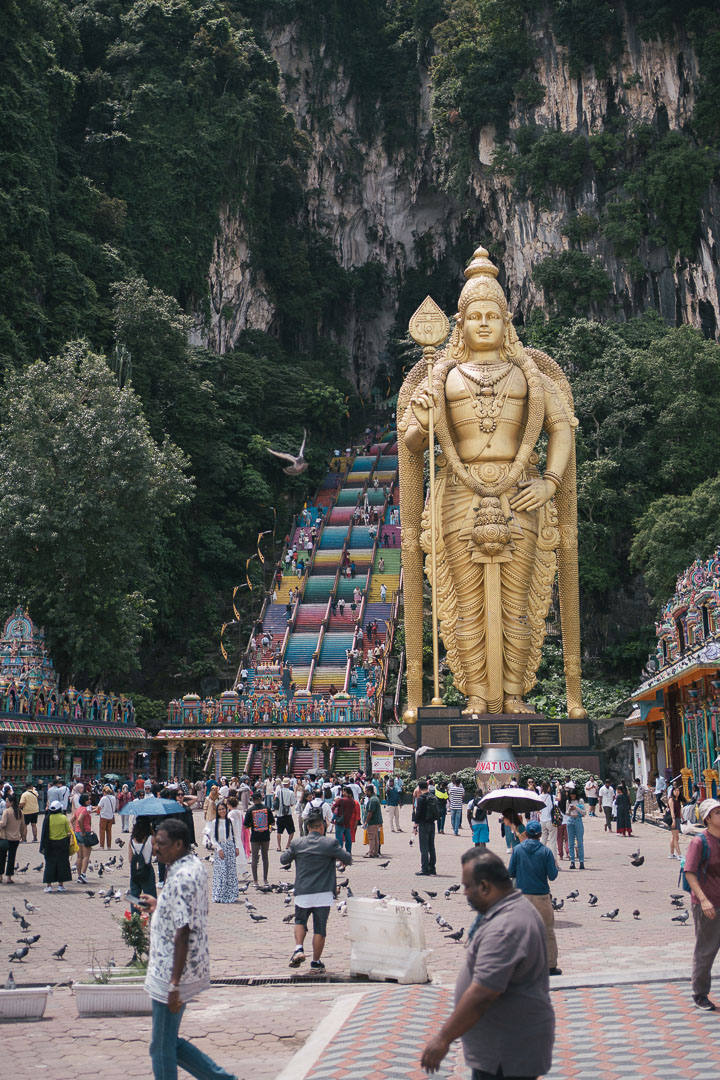
The first thing you see is a massive gold statue. Murugan, the Hindu god of war. At 42 meters, apparently the tallest Murugan statue in the world.
From its feet, a colorful staircase stretches up toward the mouth of the cave.
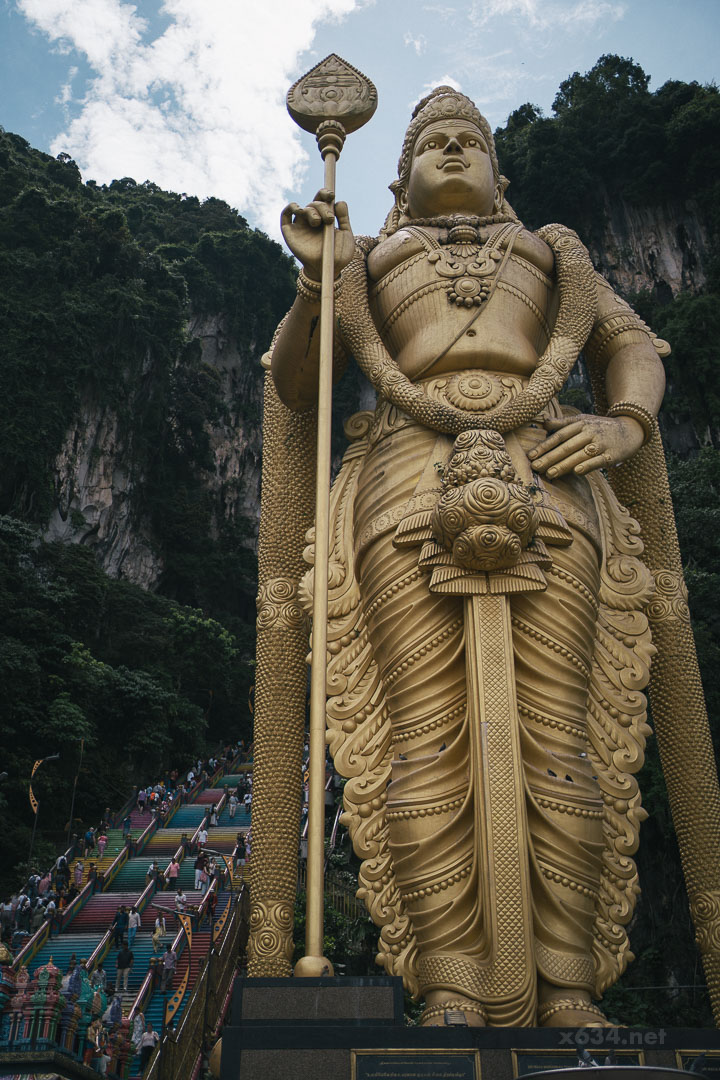
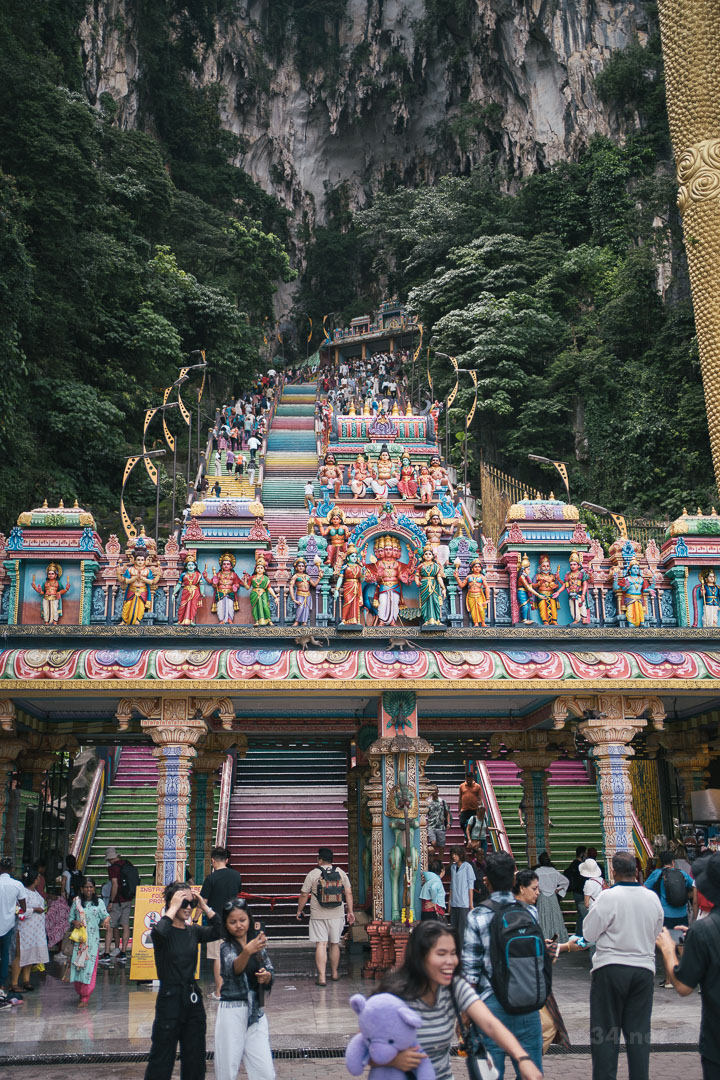
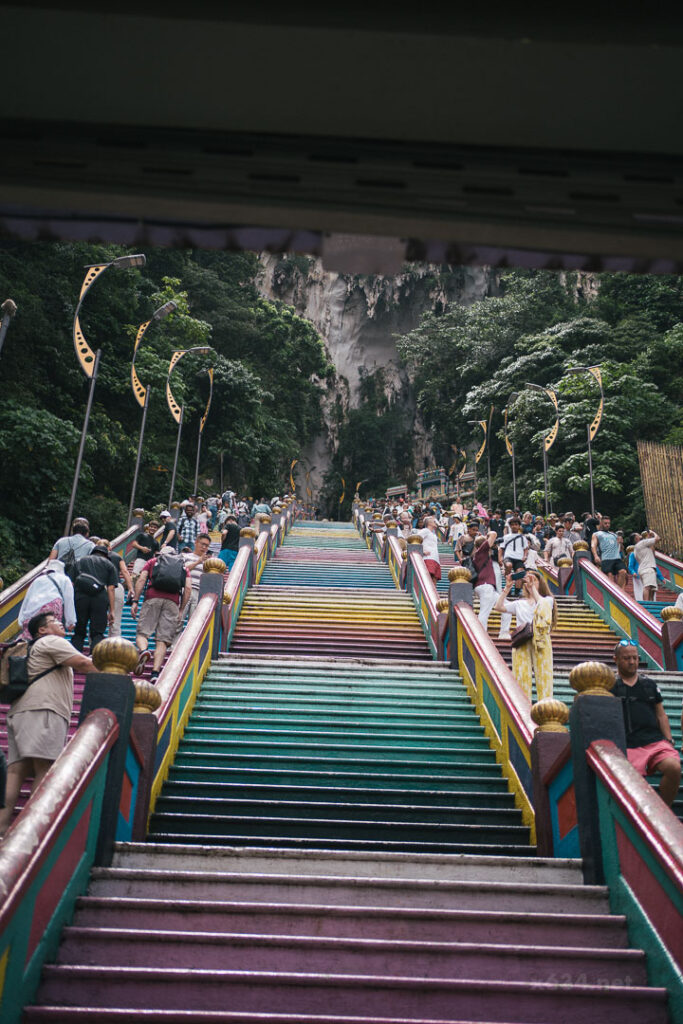
On social media, this staircase has become the face of this place. More famous than the 400-million-year-old sacred site, probably, is the colorful staircase.
But this staircase wasn’t always like this. In 2018, the temple management painted the steps without permission, hoping to attract more tourists. The authorities threatened to delist the site from the National Heritage Registry. The stairs stayed. Tourists came.
Painting a 400-million-year-old cave. A sacred site. With paint.
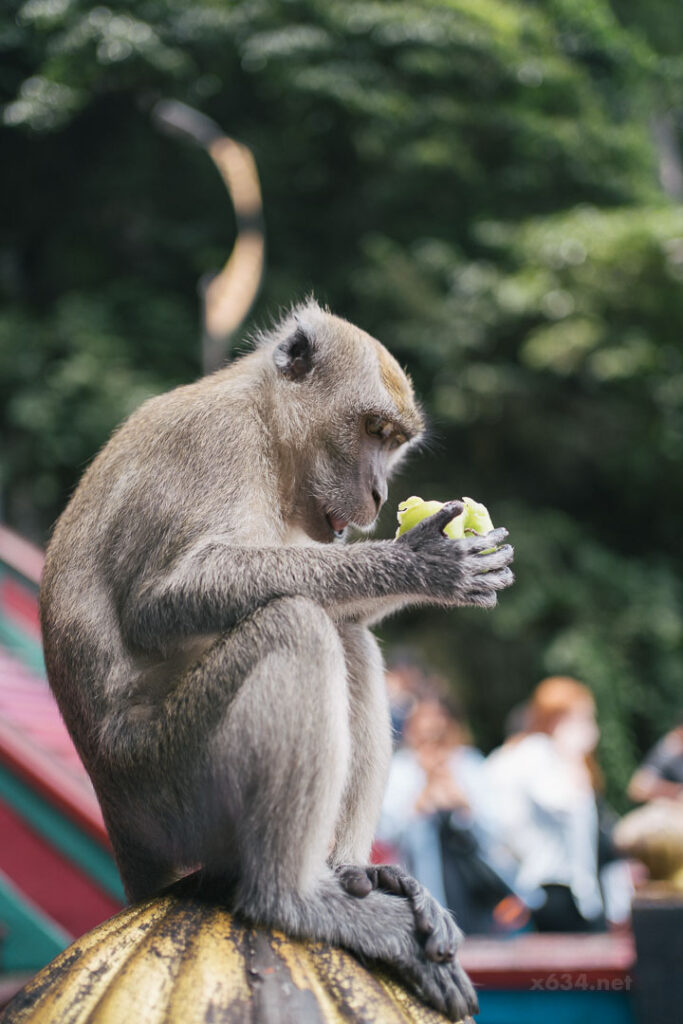
And it smells. Pigeon droppings, or monkeys, or both. Monkeys and pigeons are everywhere, uncomfortably close.
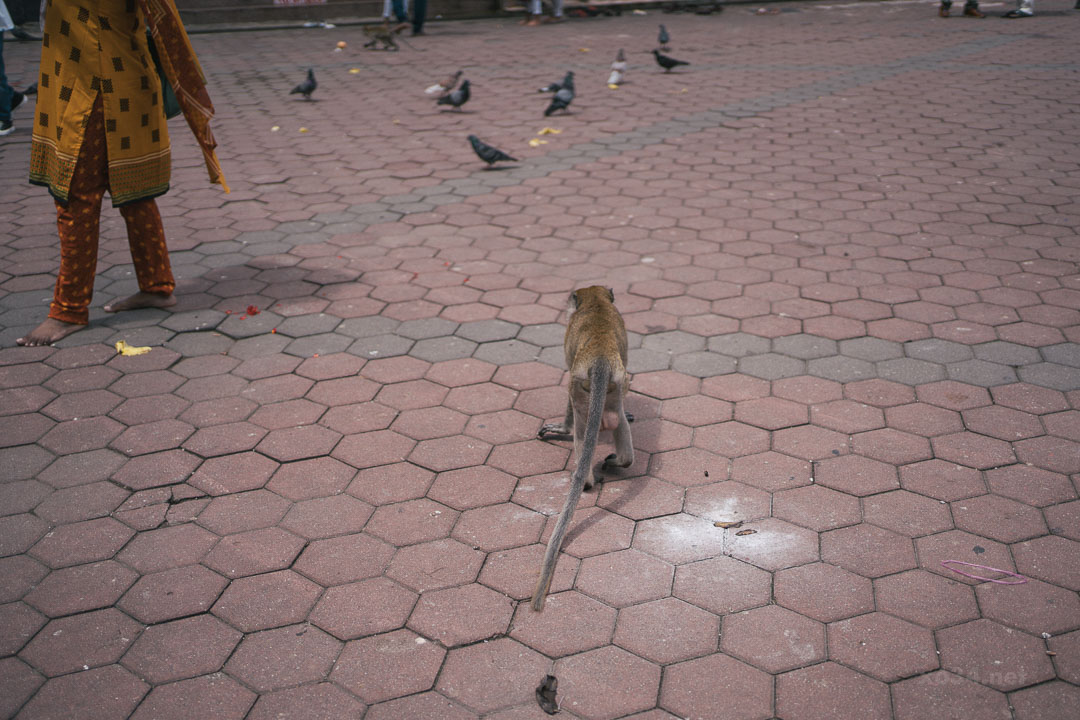
At the plaza before the stairs, I’m taking photos when a man — seemingly a devotee — approaches me. “Listen to my song,” he says. Before I can respond, a video call has started on his phone, and I’ve been pulled into the frame. He sings something for two or three minutes. When I ask what that was about, he says, “I want to share my passion with everyone,” and walks away.
The heat, the smell, the monkeys, a 42-meter golden god, a colorful staircase that caused a national controversy, and a stranger’s passion. I haven’t even climbed the stairs yet.
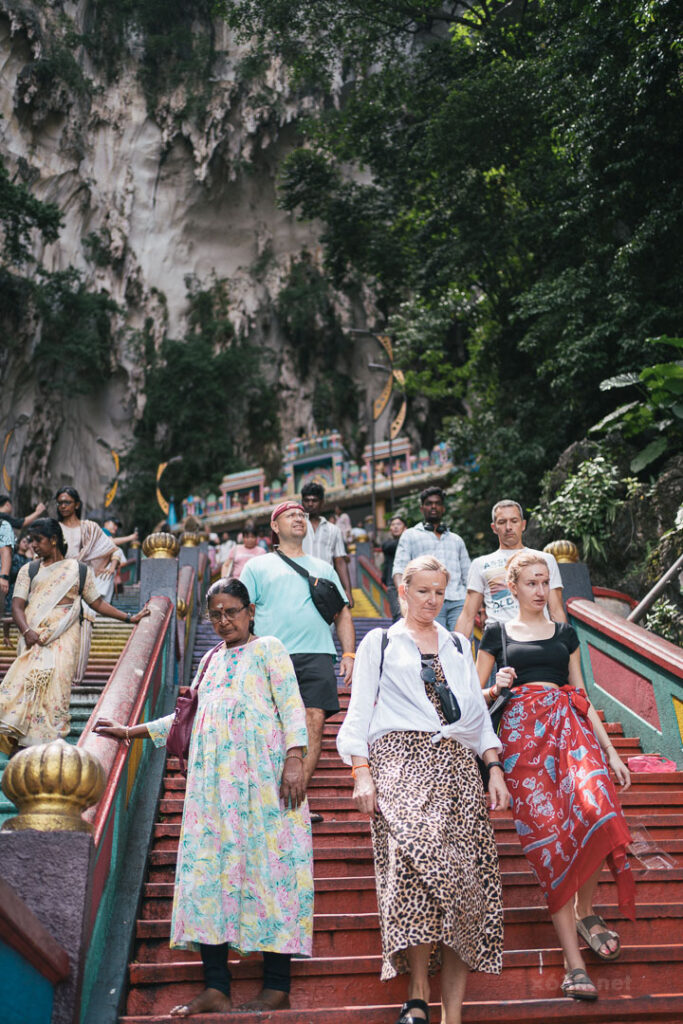
I start climbing. 272 steps. Hindu devotees climb barefoot. Tourists wear sneakers and hold up their phones. Someone is carrying three cases of water on their head. Everyone climbing the same staircase, for different reasons. A monkey sits on the handrail, eating an apple — stolen or donated, hard to say.
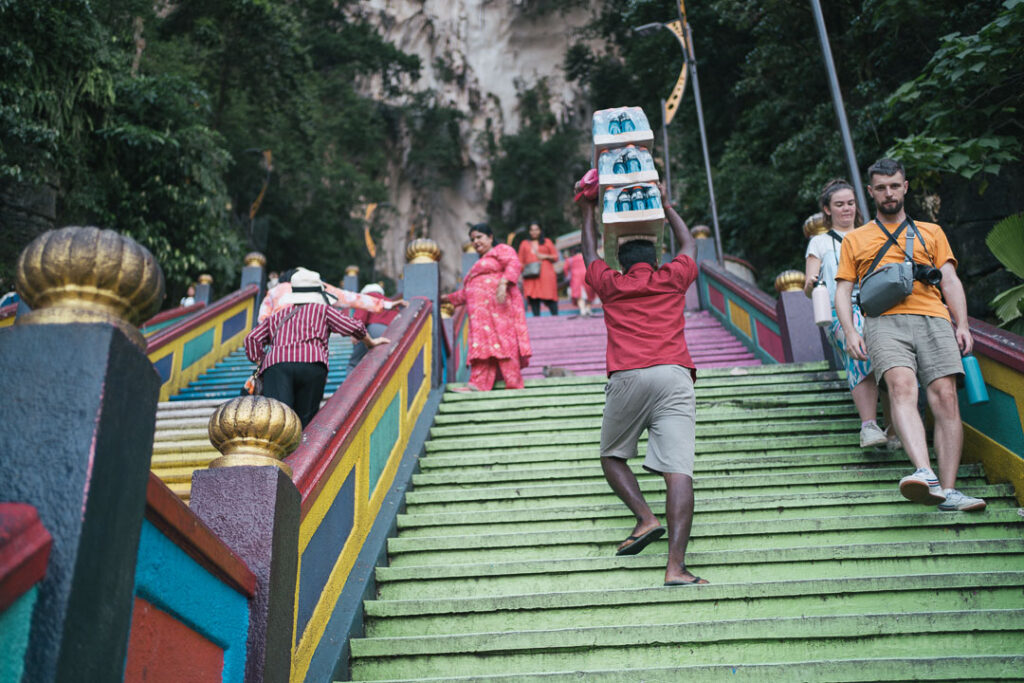
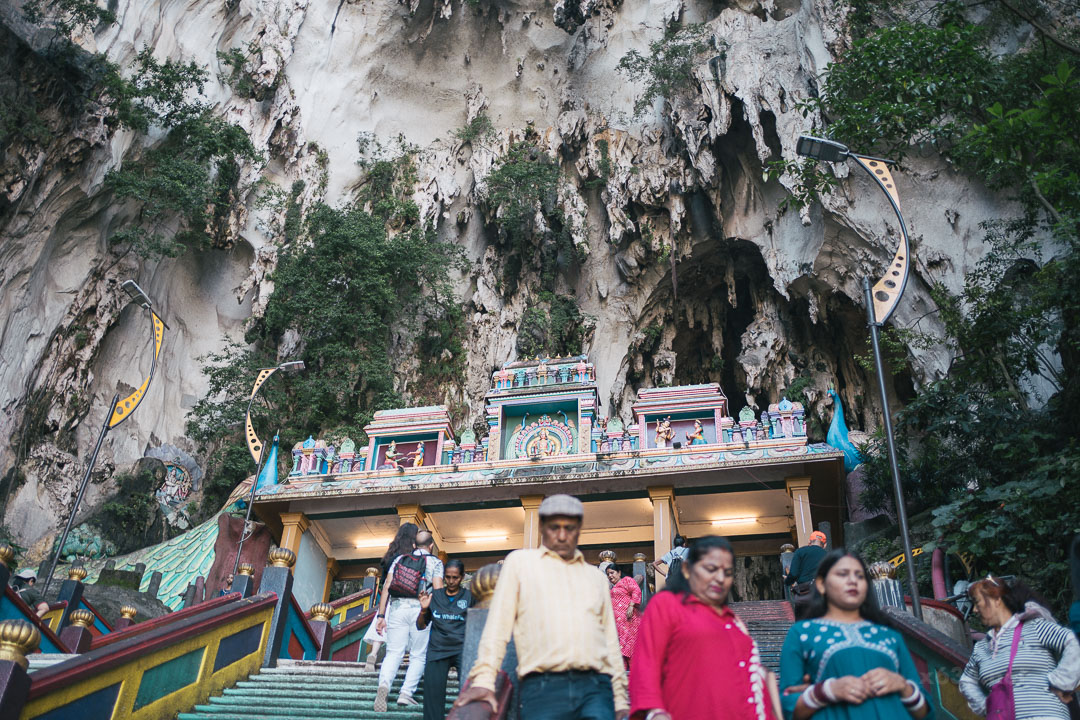
At the top, the cave opens up. Temple Cave. Inside, the air changes. It’s bigger than I expected. I’ve never seen a limestone cavern carved out on this scale. The humidity clings to your skin, water drips from above. The ceiling is high, natural light filters in, and Hindu shrines are scattered throughout.
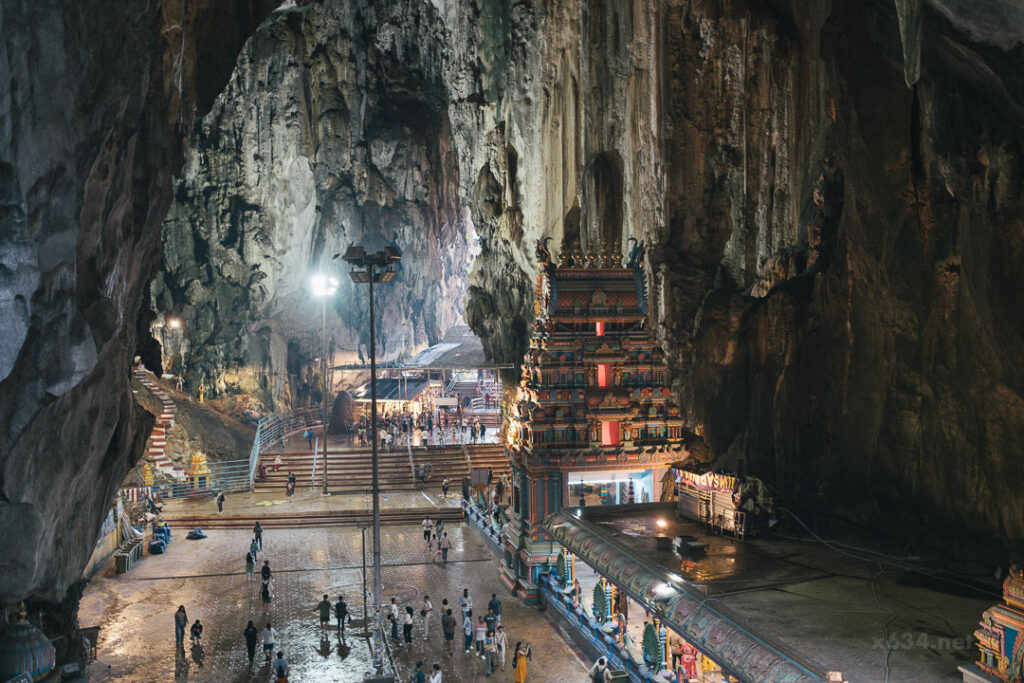
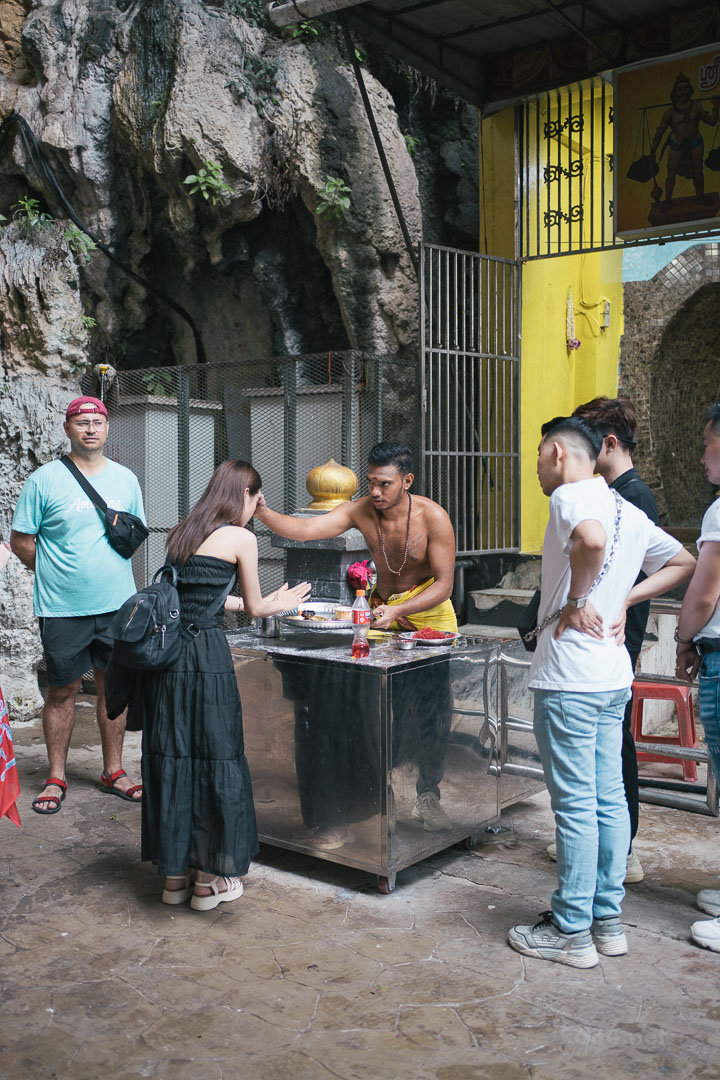
I can see why people wanted to make this a sacred place. When you stand before nature like this, you want to assign it meaning.
But 400 million years is misleading. The human story here is surprisingly recent. Indigenous people used it for shelter from rain. Chinese immigrants mined bat guano for fertilizer.
It became a sacred site in the 1890s. An Indian merchant declared that the shape of the cave entrance resembled the sacred spear of the god Murugan. That was all it took.
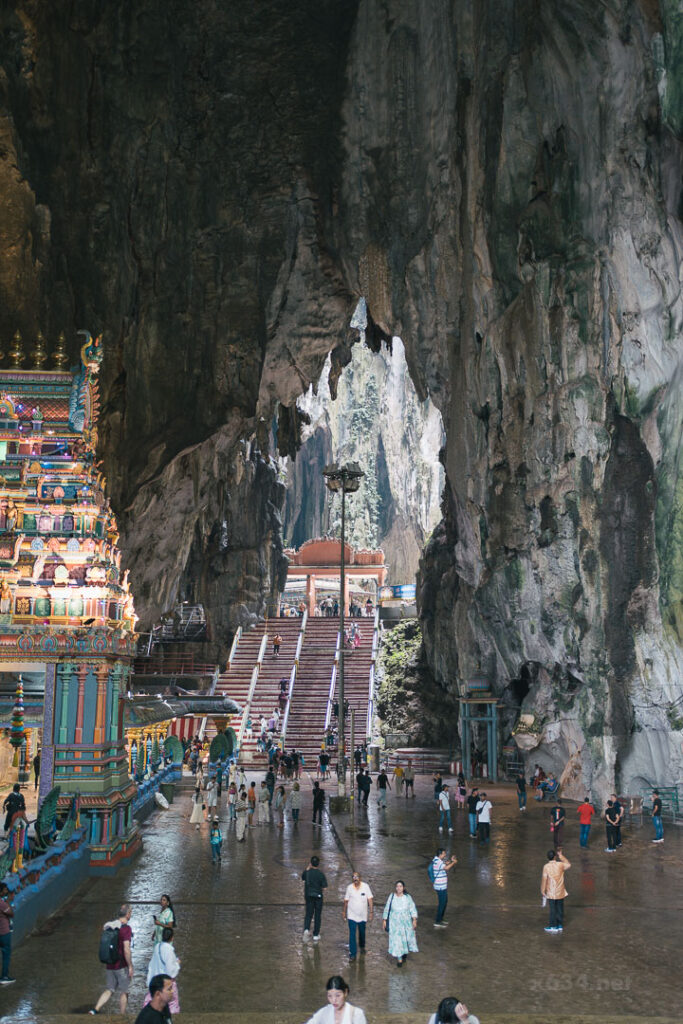
From there, the 42-meter golden statue was erected, the staircase was painted in 2018, and the whole thing spread on social media. A 400-million-year-old cave, and most of what I was looking at was from the last hundred-odd years.
I think the staircase looks better without the paint. I still do. But if it hadn’t been painted, I would never have known this place existed.
■ Location: Gombak District, Selangor (north of central Kuala Lumpur)
■ Access:
- Train: KTM Komuter from KL Sentral, approximately 30–40 minutes. Get off at Batu Caves station (the terminus). About 5–10 minutes on foot from the station to the entrance
- Also accessible by taxi or ride-hailing apps
■ Hours: Generally 6:00–21:00 daily (opening time varies by source — confirm before visiting)
■ Admission: Temple Cave is free. Some facilities charge a separate fee
■ Time needed: 1–2 hours for the main cave
■ Dress code: Shoulders and knees should be covered. Shoes must be removed at some shrines
■ Notes:
Extremely crowded during Thaipusam (January–February), but it’s a spectacular festival
Monkeys are everywhere. Don’t wave food or phones around
Pigeons too. Fair warning if you’re not a fan
It gets very hot during the day. Mornings are cooler and less crowded